What It Takes To Build A Birdhouse

20150218_223242First of all you have to learn how to use all the tools that you are going to use to make your birdhouse. You must watch a video that shows or tells you how to use a miter saw and how it works. After that step you would make a wood sandwich so that you can learn how to screw with different kinds of screws.

Next you would plan how you want your birdhouse to be so you will 20150120_104748 (1)start designing the way you want to construct it and the size that you want it to be. After that you would find wood and measure the sizes you planned it to be. You then use the miter saw to cut out your wood pieces and start putting it together. You would first apply wood glue and try to put the pieces of wood together as nice as possible and try to angel it in a perfect 90 degree angle.

Then you would learn how to use a nail gun and how it works and how it is setup. After you are done with that lesson you then grab your assembled birdhouse and nail it so that it can be more sturdy and stronger so that it does not break that easily.

20150218_231849Finally you would decorate your birdhouse the way you want it to be so that you can  paint  the sides in any way that you desire and let it dry and then your done, but before that you would add an eye screw so that when you’re done you can hang it up and that’s the process of how to build a birdhouse.

~Jennifer D.A.

Topographic Map By: Elissa Torrez

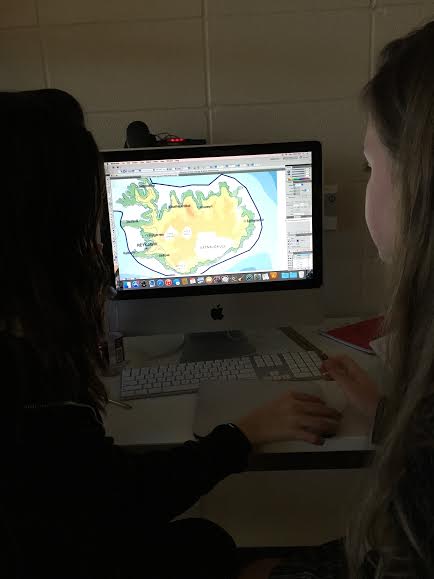
So in PLTW we had to make topographic maps of our location we were assigned. I was in a group of four. Our location was Tokyo, Japan. A topographic map has contour lines to show land features. We did Mt. Fuji and the land surrounding it.

First we had to find a good topographic map with a scale, then we had to put that picture into illustrator and trace each contour line on different layers, which took a long time, but it was fun in the end. Then we had to cut out cardboard to use when we were ready to cut it with the laser cutter. After we got the right cardboard we had to spray it with water, fix the setting on the computer for the laser cutter then we watched the laser to it’s magic. After all the layers were done we have to out all the pieces together, after we fixed it all we put colored paper on each layer and we glued all the layers together. Then, lastly we put a scale for the map. Currently our topo map is hanging on the Earth 300 wall!

In all this project was fun and it helped us with having skills we might need for future projects with Illustrator.

The Struggle by Claudia Luong

I have only discussed positive things about what we do here in the Makerspace and nothing is negative about it, it’s what I don’t like about somethings. I struggled in the engineering modules, but I gave it another shot and decided to do fabrication and construction basis. I only did it because I wanted to do the next module, materials. I looked over what we had to do and thought I could handle it and didn’t find it very challenging. That all changed when I started working on challenge 1. We had to make a “wooden sandwich,” meaning nailing/drilling different screws/nails to connect 2 wooden pieces.


Sounds easy, I thought the same thing. All I had to do was hammer in nails and screw in screws. Once I started hammering, it all went downhill. I started off just going for it, but realizing I didn’t know what in the world I was doing so automatically I scream, “HELP!” hinting to one of my peers to help a sister out. One of my classmates demonstrated and tried helping me change the way I was hammering. My nail wouldn’t go through, the nail was at an angle, or the hammer wasn’t even hitting the nail. This went on for most of the class period, but my classmate decided to nail it all the way in.


Next was the screwdriving. We have a variety of different tools. There’s not just a screwdriver, there’s a compact, phillips head. When screwdriving the screw, I was either setting the wood on fire (not literally), using the wrong bit, or wrong drill. With the help of my teachers and peers, I was able to almost but basically screw it in. I felt like I was being annoying, being confused on what to do.


Using the wrench was even more complicated because not only do you have to find the right size wrench, but you have to control two sides of your block. This required strength. Having little spaghetti arms like me was a struggle, but my group mate helped me out, by doing half of the job.


This was probably my least favorite module and made a huge impact on my decision when choosing my pathway. I knew that engineering with hammers, screws etc was not for me. I also learned about being resourceful and not being afraid to ask for help. I felt very dumb and useless while everybody was so focused and nailing everything in, but I know I can’t be good at everything so I took all the help I could get.

Wood Sandwich

Mechanical Systems by: Hope Calderon(:

For my 7th module, I did the Mechanical Systems module. This module is listed under the Engineering Pathway. The purpose of this module was to teach us about the ways of gears, how they work and move. Our first lesson was to watch a video and learn all the different types of gears, what they do, how they work and what they’re made of. When I was watching the video I had learned so many cool and interesting things I didn’t know before I watched the video, I learned that a mechanism is the part of a machine which has two or more pieces arranged so that the motion of one compels the motion of the others. The video about Mechanical Systems really opened my mind. After we watched the video we got to use The Vex Kits. The Vex Kits these really cool kits that have tons of pieces that you put together and make so many cool and fun things. Our first challenge was to make Bevel Gear and The Cam & Follower. For the Bevel Gear and the Cam & Follower we had to answer the following questions: Where is the input and output? (describe or label) Do they run in the same directions?Are the speed and torque increased, decreased or constant? What is the gear ratio? Is the flow of power reversible? Where are these mechanisms found in everyday life? After we made the Bevel Gear, The Cam & Follower and answered all the questions, we moved onto our next challenge. Our next challenge was that we had to use the Vex Kits to do one of the following: Beat an egg, Turn three separate skewers over a flame at one time, or Slice a piece of food into several pieces. We chose to turn three separate skewers over a flame at one time. At first when we were making the three separate skewers it was very difficult we didn’t know where to start, but then we asked Mrs.Sauter a couple questions and we finally got it done. When we were done making everything with the Vex Kits we were really proud. When we first started using the Vex Kits we were so confused and lost, but we got a hang of it and really had a fun time. I would totally recommend this module anyone who likes building things and being creative. At first it may seem hard but when you get the used to it it becomes easy and you have a lot of fun. (:

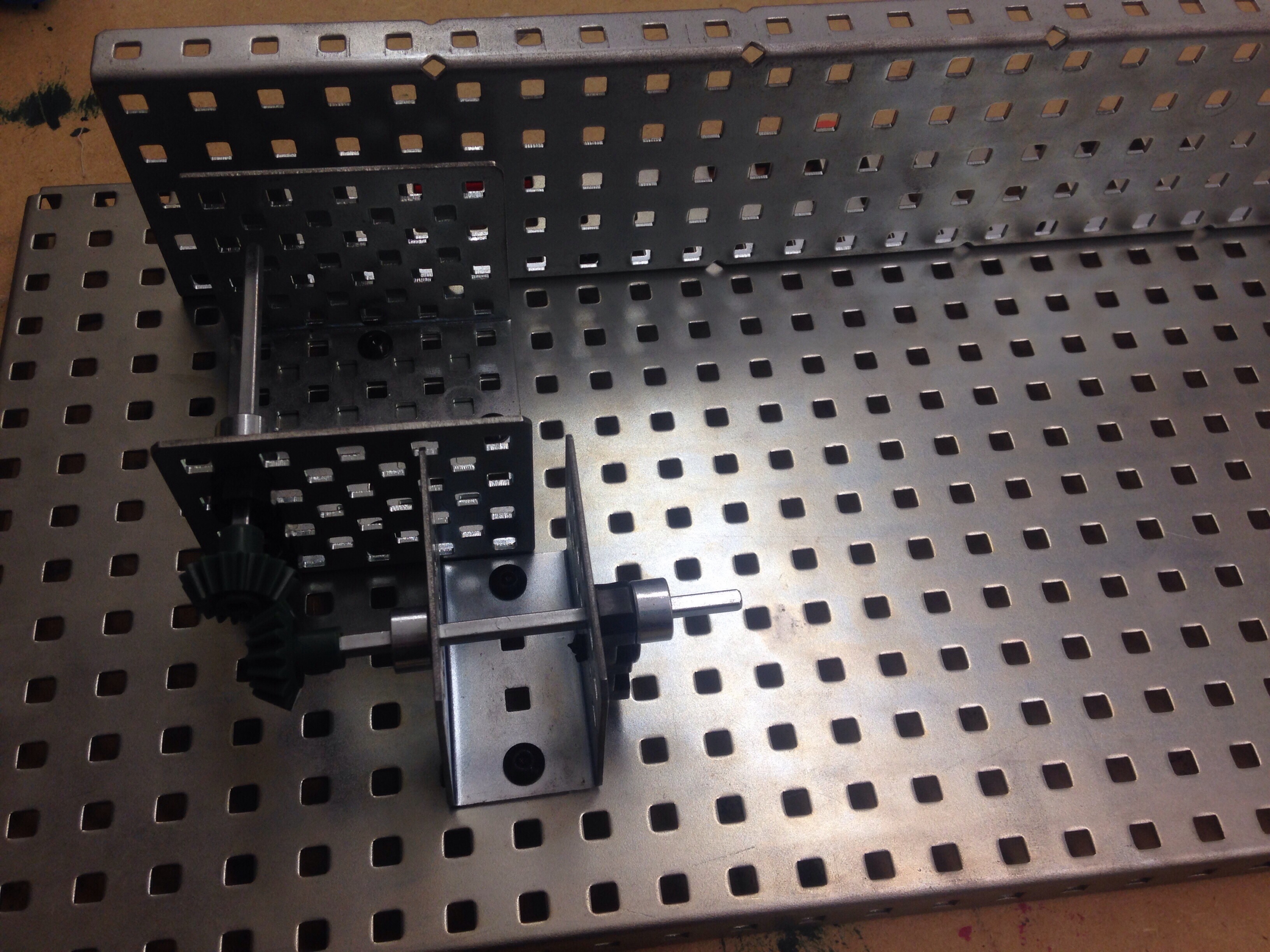
Here is a picture and of the Bevel Gear(:

Here is a picture and of the Bevel Gear(:

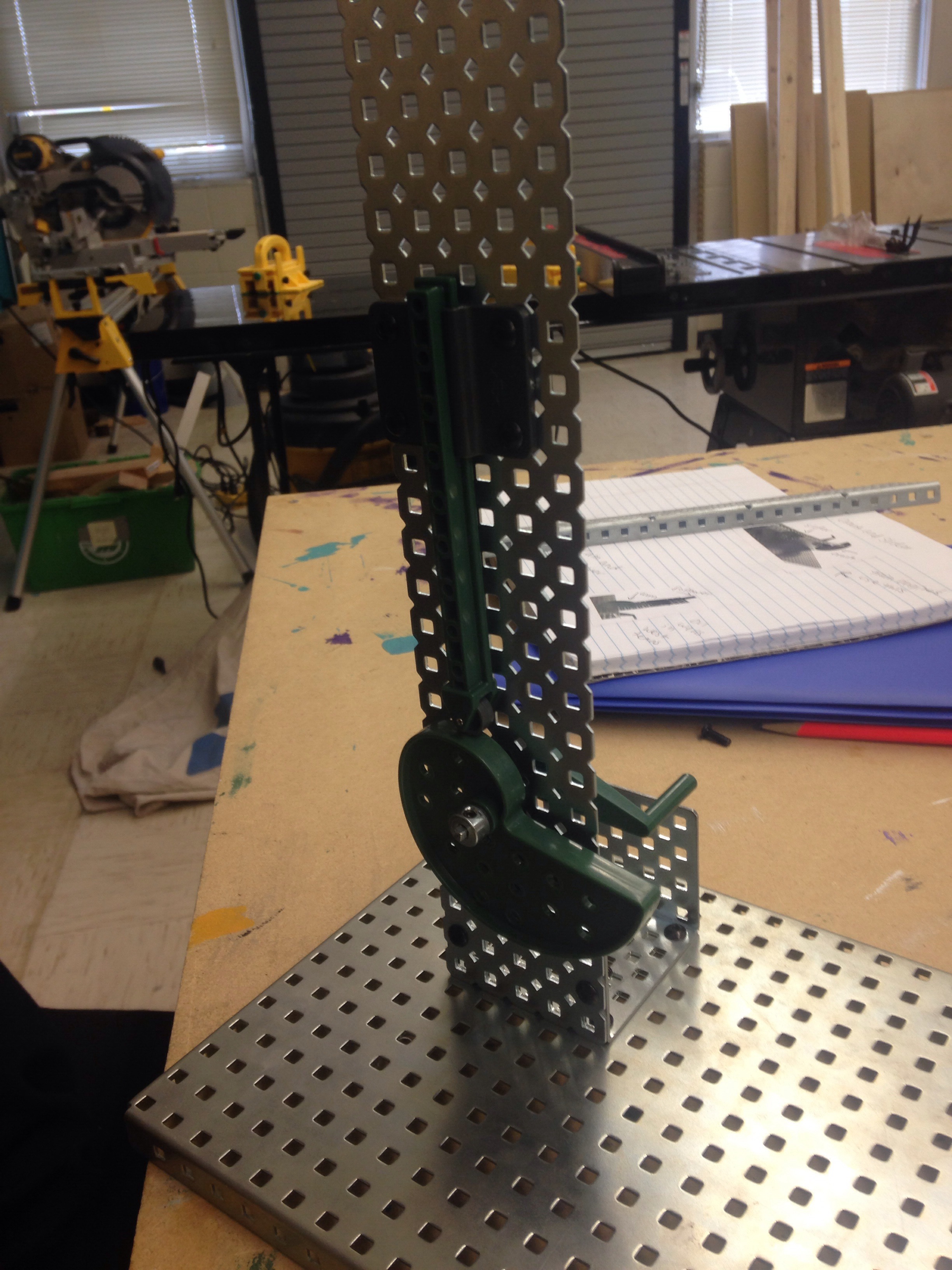
Here is a picture of The Cam & Follower

Here is a picture of The Cam & Follower(:

The Making of a Maker Project by Maite

Hello everyone! It is Maite here again. Today I want to talk about the Maker Project that we all have either applied to or are going to apply to, and hopefully we will successfully complete in a few months. We all have such different ideas and plans for those projects and to me that it was makes it so great. We get to dive into something that is completely up to us and has the potential to be everything we want it to be if we take advantage of this opportunity by using all of our time and equipment efficiently.

For these projects, we can really do just about anything. So do you know what you want to do?

My group and I have gone from idea to idea trying to see which one would be most enjoyable and possible to do. We went from a moving chess set, to a shirt with moving LED lights. Now there is a possibility of us making a video since we learned that is also an option. There are many different things that we can do for this project and I am very excited to begin it. Who knows, maybe we will combine a few of our ideas to make them even better and more complex.

My goals and hopes for this project is to learn lots more about building and constructing things that I designed. Also to better understand how to use the tools and equipment that we use so regularly. My last hope is to grow as a group mate and leader, have fun, and make a good product.

To achieve these things I think we all need to:

  1. Be creative- Don’t worry if it seems crazy, big ideas are good.
  2. Cooperate- Talk to your group to see what similarities and differences you have about your ideas.
  3. Chill out- Mistakes are not the end of the world, so learning from them and doing better from them is good.

I hope you have good time doing your maker projects!

Automation and Robotics

I am going to talk to you guys about Automation and Robotics Challenge 1. What you had to do in this module was find the robot that was matched with the first letter of your last name. These were the ones we had to search up:

A-C you will find an Industrial Robot

D-F Medical Robots

G-H Automated Guided Vehicles

I-K Robots in Agriculture

L-O Telerobots

P-R Rescue Robots

S-U Robot Toys

V-Z Household Robots

What I got to do was M; Telerobots. All we needed to find out about these robots were 9 questions like “What does your robot do?” and “How is it programed,” many easy questions like that. But the cool thing was that it wasn’t hard because that information we needed to put in a discussion board and there were also other peoples types of robots they did. Also I liked how we had to put it up in the discussion board and you could see others and read about other information of their robots. Like my robot was used to carry heavy things that would be too heavy for a person to carry.

Challenge 2 I haven’t finished yet but so far it’s been fun because you get to choose what to do. There are 10 tasks and you only have to do one. But that is programing the robot to do what the task is asking you to do. My group and I choose Task #2 which was a Robot Drag Race and all you need to do is to make it walk 20ft in the least amount of time. Since I was in robotics last year it would not be that hard for me but it is still pretty fun because you get to built the robot and program it.

I think that this could be a really fun module if you like to do Engineering because it can help you if you are taking the pathway next year. You guys might be learning how to program robots in that pathway but this can give you a little bit of help so you know what to expect next year. But besides that it’s really fun and it hands on like you don’t get to sit around all of the time looking at the computer that’s boring you actually get to move around and play around with the parts of the robots, you also get to learn how to use the tools.

Complications of Coming Up with Ideas

Hey guys, my name is Karla Rodriguez and being in 8th Grade PLTW isn’t always as simple as it seems. It may look like simple modules being completed every two weeks or so but inside, you can actually see all of the hard work that the girls are doing. Each module gives you certain requirements that need to be met, but they also require you to do your part of the assignment. The module may tell you to base your project on a health risk but the student is in charge of deciding that health risk and the whole project that is tied to it.

The reason that I’m suddenly talking about this topic is because in a few months, there is this event called the maker fair that will really test our abilities with this skill. For the maker project, we will each have to create something that is related workto topic you are interested in. I myself am slightly nervous because I’m seeing a lot of people already starting while I on the other hand, have barely started thinking and developing some ideas. Coming up with ideas is actually harder than it may seem. Some questions that I come up with when coming up with ideas are . . .

1) Is it something that interest you?    2) Does it tie in to what you’re interested in?

3) Will the viewer be interested?         4) Can you accomplish the task?

I feel that for a project like this, it should really revolve around you, and your interest, and if you will be able to finish it. So far, all that I have is that I want my project to be hands on (not related to technology), and to help the environment. With this ideology, the first thing that came to my mind was to create a sculpture using recycled material. My idea seemed pretty fun at the moment but after a environmentwhile I started thinking, where would I put it once I’m done?, would I be able to finish?, and so on. After I thought my questions, my sculpture idea quickly went into the recycling bin inside my brain.

The maker fair will really be a challenge to many of use but like others we’ve faced, we’ll end up triumphant with many projects to display. Until then I will keep on thinking and wondering about new possibilities of my maker project, as I’m sure that you will too. Who knew that coming up with ideas was hard?

Failure is Okay

Failure is Okay

By Kayla Zinsmeyer

Growing up, we are often presented with the idea that failure is simply not an option. In elementary school, if you didn’t finish your project you probably ‘failed’. Of course, that only applied to the grade on your report card, even if you learned more than anyone else in the class. In fact, this rule applies to most of our classes, even throughout middle school.

However, in eighth grade PLTW, Ms. Sauter is teaching us by a different ruleset. From the first day of class, until the maker project, which is arguably one of the most important projects in the entire course, we have been told to embrace failure. On our very first module, when my group couldn’t get our speaker to function, we still got a very high grade, even though our speaker didn’t actually do anything, simply because we followed the design process. And recently, when we built a 3d topographic map, even though we never actually built the map, we only got a few points off, because we learned a new program on our own, put in extra hours to try to finish, and just worked hard in general. The maker project doesn’t even require you finish, as long as you can prove your process.

By teaching us this way, Ms. Sauter prepares us for what the real world is actually like. Professional engineers know that a new design isn’t going to be perfect the first time, but that it will provide a stepping-stone to the end product. By failing at first, you can use what you have learned through your mistakes to make your finished product even better. Failure is when you haven’t learned anything, not when you make a mistake

On The Road To Success!

Yoselin R.

What is PLTW?

PLTW is a class that consist of the use of technology, engineering, and mathematics to solve problem people can face. This class is a class we are required to take throughout our middle school years and it helps us get a strong taste of what creativity feels like.

unnamed (7)

What Have We Done?

Our latest project consisted of creating a topographic map about a specific place, (we researched during science class). During our project, we used a computer programming system that allowed us to trace the topographic map from another source. After we had our topographic map traced, we used the Laser printer to print out our topographic maps onto cardboard. Once we had our topographic maps printed out, we had to assemble them and make them look nice and presentable. This project was very challenging but overall very interesting. I was new to this programming system which was one of the reasons why the project started at a low point. At the end of the project I was happy to see that our hard work payed off.

 unnamed (8)What Is a Topographic Map?

A topographic map is a map that contains a variety of layers of a specific land feature. A topographic map is usually organizes by having the oldest layer at the bottom and working it’s way up toward the top. The top layer is usually where the youngest layer is located at. Also, a topographic map works by having a specific scale that represents the amount of time from one layer to the other.

What Makes PLTW Important?

Our school is a STEAM based school. Being a STEAM school means to have a special focus on science, technology, engineering, art, and mathematics. We are required to solve problems creatively and effectively in support of the communities needs by using STEAM. PLTW is a special class that helps us improve our communication skills along with our engineering and creativity skills.

New discoveries in PLTW – Emelyn Macias

Emelyn Macias

New discoveries in PLTW


Pltw is seriously the best class because i’m always learning new things i have never found out, such as I never knew I was going to be interested in Media Tech because i don’t know how to work with cameras and editing, turns out I put media tech as my first choice for my pathway which is pretty cool because pltw has taught me new things that I never knew I would like, because I was going to choose biomed and I tried the modules and I didn’t really feel the same way about biomed, I actually finished all the modules for media tech and I only did 2 for biomed. Pltw is a class to learn new things and discover new things! Which is so cool.


One of the recent modules I just did was engeneering and let me be honest engineering isn’t my thing… I’m not good at building things. I find building things hard for me because I’m not creative as other girls that have lots of ideas on building things. So we just built a bridge out of toothpicks… Wasn’t the best bridge ever, but we really did fail because my group and I had to really plan this out because engeneering wasn’t something we liked, nobody in my group really liked it. When me and my group saw that we had to build it out of toothpicks we said “oh that doesn’t sound that bad!” Oh yeah it was bad our bridge was not complete, it was half way done because the glue wasn’t that stable! That’s why we should have different plans and different ways of building stuff because there can always be a better and stable way to build stuff, which is something that I learned from this module which was there isn’t just one right idea! There’s plenty of useful ideas that can help!


It was fun working on a pathway that id never imagine myself even thinking about it! It was a new thing for me but although engineering isn’t the best thing for me it’s always nice to try new things because you learn more about yourself!