Magazinez2Checkerboards By: Alexis Miller

This year we are going to make projects to submit into the mini maker faire. My group will be making a checkerboard with the laser cutter and 3D printer. We are going to use a piece of cork and shade out the squares. For the pieces we are going to design them online using inventor. The 3D printer will print the pieces in two colors of our choice. Now that I have summarized the final product of our project I am going to break down the process of developing our idea and product.

Believe it or not this idea started out as a magazine. We researched how to make a news paper, jobs involved in production and everything related to magazines. As we researched on and on the idea of a magazine became more and more out of reach. Our group was already formed so we needed to find a new idea that we all agreed with. Even though we lost a group member due to our change in project we still kept moving. This is when we came up with the idea of a checker board.We knew that it would be rewarding to have a project that we could use and enjoy but we could also incorporate technology.

Now that we had our idea it was time to decide how to incorporate technology. We could incorporate technology into the production or the use. We decided the the production of the board would be the most obtainable and efficient. This is when we decided that making a checkerboard with the laser cutter and 3D printer would be the thing to do. At this point in our project we needed to learn how to use this. This was very convenient because we were able to complete a module on using the program inventor. Inventor is an online program used for designing items to 3D print.

As of right now we are working on the module but now I will talk about our plans for the future of this project. Prior to this we filled out an application for this project. In this application we were required to make a timeline for our intended timing of this project. We will try to follow this timeline for the success of the project.I am looking forward to seeing how our project turns out.

What I like about PLTW by amy torres

This 6 weeks have been really fun…in PLTW. The modules I have done were Photography and the one I am currently working on Prosthetics. They are both really fun and just so cool to learn.For photography I had to make a camera first which involved a type of box or container that lets NO light in. We had to take a picture outside and all that. The process is long but it was really cool. I enjoyed doing that and to be honest I think it was one of my favorite modules that I have done!For prosthetics it was a lot of engineering and bio-med involved. I really am enjoying this one because it involves something that I really enjoy doing engineering and I am taking the Bio-med path next year. This module is really fun and I have learned a lot. As I am doing this module I felt bad for the people who don’t have arms and/or legs. I enjoyed doing this and I hope it’s something that will stay with me.

Pathway Day at Ann Richards

In eighth-grade you transition from middle school to high school. At Ann Richards, going into high school means that we get to choose our own pathway. The pathways being engineering, biomedical, and media tech. But before we choose or decide what we want to take in high school, we image (2)take a part of our school day to see pathways in action. In this day, we go to different classrooms to see a different pathways. Even though, we explore these pathways in PLTW, and see majority of what happens, our school thinks it’s best for us to see pathways upclose. .We also explore electives with pathway backgrounds
At the start of the day, each group of eighth graders starts in a different classroom assigned to a different pathway. My group started in the biomedical pathway classroom. In the biomedical pathway we got to see what students do in the pathway and specifically what the pathway is about. In the biomedical pathway, students learn about Human body structure, how are human body works, and medicine, and starting the future for medicine. Students also dissect animals as a replacement for a human body. A fun fact about ninth-grade biomed class, is you get to dissect a sheep’s heart.image (1)

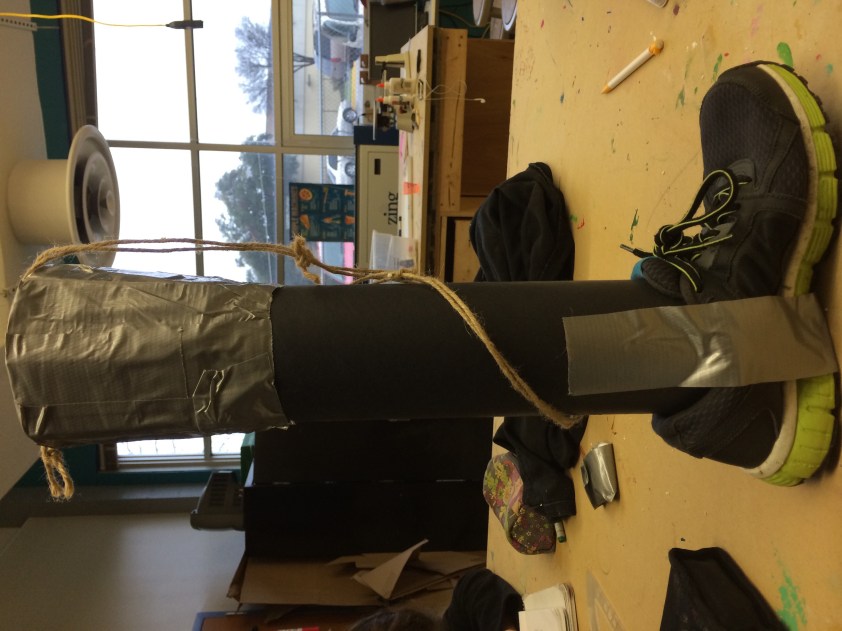
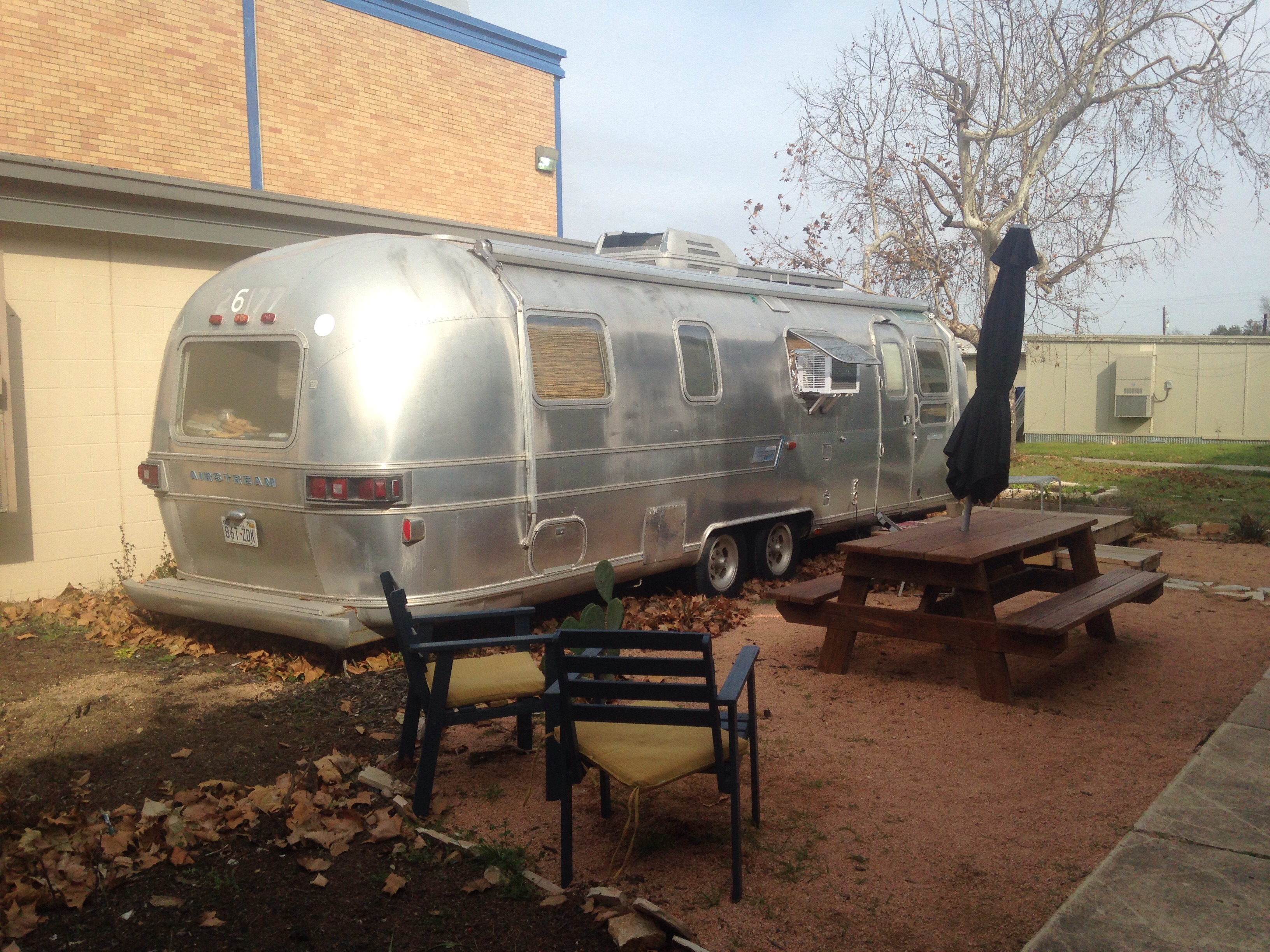
After going to the biomed classroom, we transitioned to the engineering classes. When we went to the engineering classes,the students had a simulation setup for us, in the simulation, we had seven minutes to create a tower with noodles and tape, that would hold up a marshmallow without falling down.The students set up this simulation to give an idea about how engineering class would be. After the activity in one of the engineering classrooms, we went to the other room to hear about the students life taking the engineering pathway. In the pathway, students have projects where they must build something and have it work properly. There are challenges set up for them to complete, and in the end they come out with a real finished product. Engineering class is also responsible for a trailer that is meant to be a teachers lounge.

Finally, we went to our last pathway classroom. Media tech is a class for anything related to producing media. Learn how to create animation and skills meant for creating media related projects. Skills, such as photoshopping, animating, and filming. In the earlier high school grades, students began to learn the skills and practice them. Then in the older high school grades, scenes use the skills to create and produce actual movies. These projects are also meant to do outside of school, you could possibly catch some Ann Richards students doing some filming downtown. The students do a big project, that they present to actual film directors and producers.

And if you feel that you need to learn more from your pathway, you can take one elective is related to the class. Such as computer science, film class, and forensic science class.Pathway day was a useful day to discover what pathway students would want to take for high school. Through this day I discovered for myself what pathway I want to take, happens to be biomed. It also help me find electives that I could use for the future. I feel that my high school life and I will have a good background for future careers.

by Arianna Nunez

Confetti Cannon

By Astrid J.

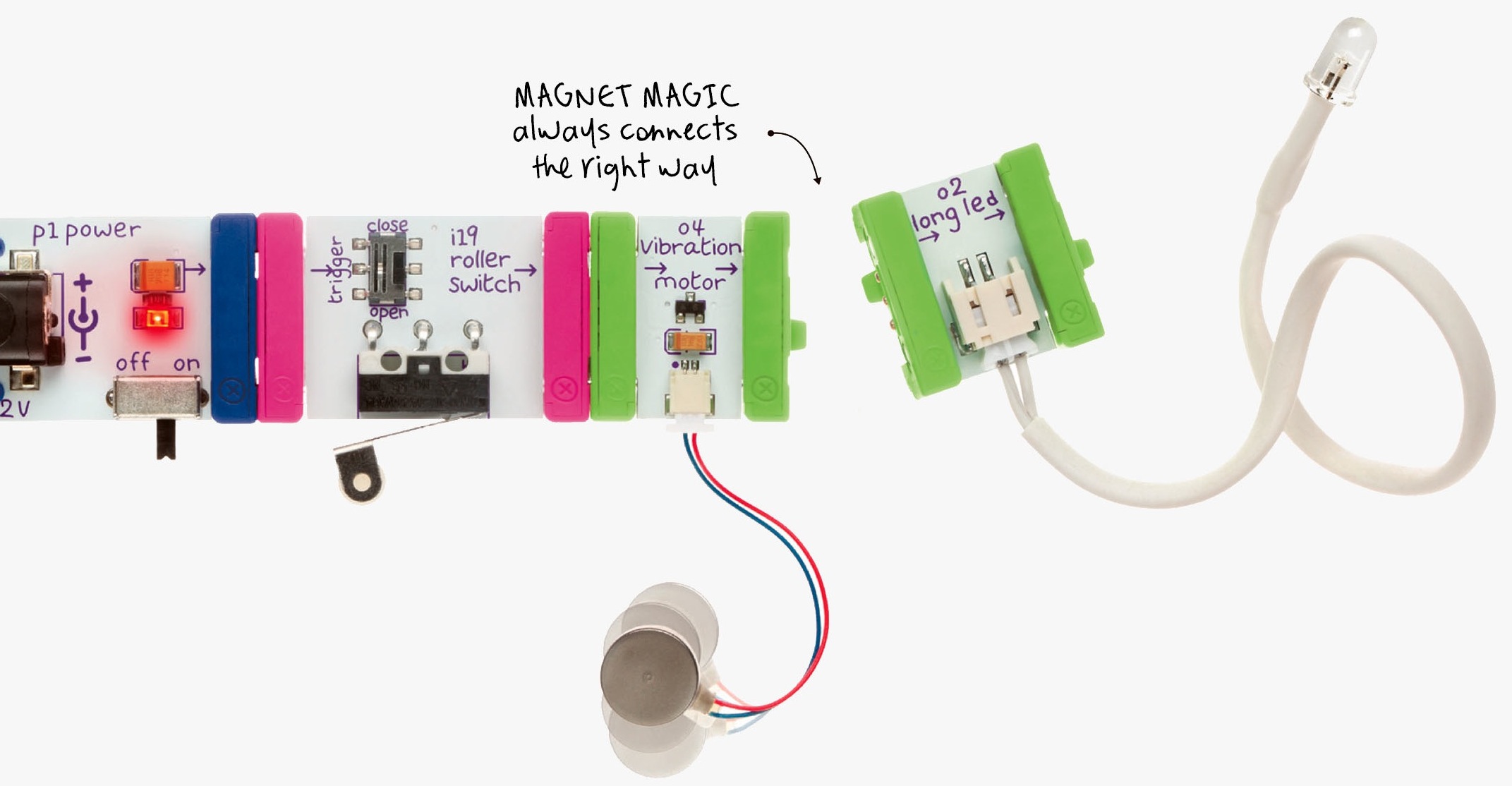
For our computer science module, Sandy, Marlene, and I made a confetti cannon. Originally it was going to use LittleBits to spin a fan that blows confetti out of a cannon-shaped structure. LittleBits are small magnetic electronics that snap together to make a circuit. Ours was going to have a battery, then a button, and then a spinning piece that would have a cardboard fan attached to it. Here is a picture of LittleBits:

littlebits-simple-circuit

However, through this module we developed such a good understanding about circuits, we didn’t even need the LittleBits to make our cannon. We ended up using a battery, alligator clips, and a plastic fan (our cardboard fan didn’t blow as much air as the plastic pre-made one). This enhanced our cannon quite a bit.

This module really helped me to understand circuits much more than I used to. I now know how to make something that works efficiently and how to use an alternative to a button.

Here is our video of the confetti cannon in action! https://docs.google.com/a/annrichardsstars.com/file/d/0B85wGa6GkiXAV2VFRC1ScDRQdVU/edit?usp=docslist_api

Catherine Gavin- Laser Cutting&Module

While working on the topographic maps we were learning the basic routes of the design program, and how to apply the knowledge we were learning in science and apply it to real programs, such as the laser cutter, and make something real, instead of just a simulation, like we would in any other class. And in combining the things we learned in science, and through the laser cutting, we will now be applying THAT information to the module we are now working on now, which is Computer Automated drafting. We thought that this would also lead well into the Maker Project I am planing to work on, which involves both laser cutting, 3D printing, and the Inventor program.

While Completing this module/project I was not particularly “sparked” with any emotions, but I did feel impressed with myself in that I felt although this was something that maybe even a professional could have done. I worked very hard on the laser cutting, and was very happy with the outcome. Aswell with the Computer Automated drafting module, I think even someone with a degree like my mom would have trouble figuring out the program. I felt very proud of myself with it aswell.

I think because now so many fields are technology based, having a background in things like design, and 3D printing could give me a boost in really any field, especially in the future. Also because you do so many things with this, you can really just have this as a base, and be able to more strongly branch of of the concrete base that was given to us. I recently saw a whole car that was 3D printed, which really goes to show how with this knowledge you are able to apply it into something even bigger and better.

During this module and project I think that I contributed quite a lot. Although I was not specifically titled this, or given the job, I really took charge and made sure that things got done, and really acted as a manager would. Elly and I, although we’re not the cartographers decided to work on it anyway, because if we didn’t do it no one would, and so we got it done and finished. And now during this module, we are much more a “group”, as in there is no single person that is fully in charge, and we all work together. I think that what I could have done better would be to contribute less to one thing and have a more diverse working method.

Topographic map

Topographic maps
By: Ariela Velaquez
In science class we had an assinment to go to pltw and make a topographic map of what ever state we had gotten. I choose Paoha Hawaii, so me and anyone else that had the same state that I have had to group together to make one topographic map.
Lestle s, Leslie M, Zoey R and I worked together to create a wonderful topographic map. To be honest all of us were confused. We had to use a program called adobe illustrator. We had to find a picture of a topographic map to cut out so we find the right picture we needed. The thing that was hard was not finding the picture, it was tracing the picture! It took forever! When Ms. Sauter told us you needed patients to trace it BOY SHE WAS RIGHT! To make the job a little easier for ourselves everyone I the team helped out and at least do 2 lines to trace.
Once we were done with tacing that’s when my skills and knowledge came in. I was the expert at laser cutting. I was the teachers and my teammates where the students. I knew exactly what to do. I got straight to the computer that was connected to the laser cutter. I opened the file to check if everything was right. Then I went to properties and made sure everything was perfect so I won’t burn the whole entire school, then I sen the file to the laser cutter. When the file was sent to the laser cutter I quickly checked if the cardboard was good on its bed and that the cardboard was wet. Then when I was ready for it to cut I pressed the button that does it al… Go.
The laser cutter did its job. It cutter perfectly and everything turned out the way it was suppose to be. Once we glued all of our pieces together we created one beautiful topographic map. We were the first ones in the whole entire class to be done! 🙂 All of the team and I were so proud of ourselves because we
worked hard and we worked as a team.

Mission Statement- Rebecca B.

ARS Mission Statement: Blog Post


In PLTW, we are always learning and testing out new things. There are usually mostly related to something biomedical, like creating a prosthetic leg, or engineering, like making a mini bridge, or something else related to media tech. Yes, the module I did was media tech related, but it was more than some project about making a birdhouse or creating a camera. This module was different. It was related to the school.


The module I did was the mission statement video. We had to create a video where we showed videos modeling our mission statement. My group worked very hard, collecting a variety of footage from around the school. We had the videos organized by first having the mission statement videos, with a voiceover of my group saying the mission statement, then after that we had some fun videos of some parts of the school, girls working hard, and even some funnier scenes. Throughout that part of the video, we had music playing.


In our mission statement, we had the title of the school when it says “The Ann Richards School for Young Women Leaders dedicates itself to…”. After that, when it says “attend and graduate from college” we had video footage of our school’s college center. Following that, when it the mission statement says “commit to a healthy and well-balanced lifestyle”, we had footage of our school’s volleyball team playing volleyball in the gym. For the rest of the video, along with what the statement says, we would have things like girls working, or girls working on things in our maker space. I thought we did a pretty good job of portraying the mission statement in our videos.


Self Taught Self-Teaching

By Helen Foster

I’m sure all of you remember last year’s PLTW class. We typed, we built lawn ornaments, but most importantly, we learned a program called Inventor. Inventor is a 3D CAD(Computer Automated Drafting) program used to draft products 3-dimensionally. Sounds pretty straight forward, right? Well, not exactly. Last year we learned the ups and downs of Inventor and I understood it quickly without too much difficulty. It’s been about a year since we used Inventor though, and when I learned we had to do the CAD module I knew I was in trouble.

Even though I learned this program relatively easily, relearning it was a big challenge. I didn’t have a teacher guiding me through each step and I had forgotten almost everything I learned in 7th grade. I could recall some of the basics, but even those I could barely do without messing up or getting frustrated. What plane was I supposed to put my 2D shape on? Why won’t it extend? How do I get this hinge to go the right way? Why is nothing working!? I began to become very stressed because I couldn’t find a good tutorial to help me with what I needed. Ms. Deeter and Mrs. Sauter weren’t there to help me whenever I was confused, and I could ask my dad at home because he knew the program but I didn’t have access to it on my computer. I only had one option: to teach myself.

It seems hard, but self-taught learning is probably the best way to do it. It’s all about experimenting and not caring if it doesn’t work the first time. There’s no shaming in starting over from scratch or having to press Ctrl+Z until your fingers hurt. It’s all part of the learning process. If there’s anything that’s important in this class, it’s being able to teach yourself how to teach yourself. That may not make sense, but you’ll know what I mean when you try it yourself. Just open up a program and start clicking buttons. It’s not scary because there’s no consequences. If you get really stuck, there’s usually a help button, but sometimes even that often doesn’t have what you need. Experiment and try things out. You never know what you can learn if you just try.

Feminine Anatomy, Independence, and a Recipe For Disaster (by Avery)

I’m not sure where to begin.

Actually, yes I do. Part one:

A while ago I actually finished my birdhouse after a lot of hard work. Because I had recently changed classes due to not being that great at math after all (it’s a long story) I had to pick up in the middle of a module. No one else was doing mine in the new class (isn’t that always the case?) so I, being the STRONG independent young woman I am, took on the project by myself.

This was a bad idea.

Number one, a birdhouse requires lots of work. There is the matter of the saws, the brad nailer, the glue, and the paint. Oh, and don’t forget planning, the design matrix, and the statement. Not that I’m complaining. It was a great experience, really.

Part two:

I might have mentioned in previous posts that I had completed the CAD module with much success and anticipated a 3d printing module. Actually, I didn’t mention this at all in any blog posts, but I did do this. To cut to the chase, there is now a 3d printing module, and I was ready. One problem.

No one in my new class had done the CAD module yet.

But again, I tried to be a STRONG independent young woman and did it by myself. I was required to think up ten ideas, and on the fourth one, I suddenly had an idea. A heart. A human, anatomically correct, non-working, heart. And then I thought, well, why don’t I make another body part? And for some reason, the first thing I thought of was a uterus.

Yes. A uterus.

The whole uterus idea seemed like a good idea, until it took multiple weeks, frustration, failing grades, and overall struggle. What went in:

uterus-fallopain-ovary-120507

What went out:

blogger-image-1764581287

But it was fun.

-Avery :3

The Making Of A Prosthetic

I never actually thought of the struggle some people live without having the function of one leg or both. It’s something that I never actually thought of until I chose this module, to actually try to make something that will help someone and make their life easier. Making a prosthetic leg wasn’t the easiest thing ever like I thought it would be. We had to make it comfortable enough for the person to be using. As well as we had to make it good enough for the person to move around in. Doing this module was an interesting  one  to do because I never actually thought of creating something that would be useful for someone to use.


Before we made the prosthetic leg we had to choose an ability that we had, but had to give up for 5 minutes and I chose the ability to not see. For does five minutes it was a big struggle to not be able to see my surroundings and what I’m doing. As well as I got an idea of how people have to deal with this in their everyday lifestyle and how maybe one day I can help to prevent that from happening. I really did enjoy making something that will help the community one day and I look forward to doing more things like this in the future. – Jackelyn Ortega