Rube Goldberg By: Marissa Pedroza

Right now in PLTW two classmates and I are making a Rube Goldberg machine and to those of you who just went. “what’s a Rube Goldberg machine?”. A Rube Goldberg is a machine that malfunctions in a certain way to do something or make something. Our Rube Goldberg will be displayed at the Makerfair.

The materials we used for this project are:

  • candy? Maybe? 
  • A dinosaur?
  • ketchup holders
  • popsicle sticks
  • glue \ tape
  • spoon
  • dominos
  • 3D printing
  • plastic water bottles

This invention was my idea I saw it on a commercial for Disney channel and I have always wanted to make one since I was little. So to be able to do this project it was so cool and fun! I enjoyed it with my classmates Angelica and Aileen. They were a big help. This project would have taken forever and over the summer I want to make more of these machines because this was really fun and I recommend it for you to make. This project took us a lot of time and we had so many drafts because we had to create possible solutions. Even though we are still building it we hope it comes out well!

Steps to making a rube goldberg machine: (1) you draw drafts and think of the pros and cons (3-5)  (2) start  gathering the materials needed for this project (we used materials that were cheap you can find anything whatever fits your needs. We were upcycling materials and a little bit of recycling because it doesn’t hurt) (3) start building (have fun) (4) once you’re finished  enjoy your project have fun with it. Use it often, and try to build you machine with purpose so that you can use it like ours gives you candy. This project should NOT be stressful!

If you would like to see our invention go to the Makerfair and you can see it for FREE! This invention took us a lot of time to make so if you could please respect it. Thank you!

https://www.google.com/search?q=mcdonalds+ketchup+holders&safe=active&biw=1821&bih=1004&source=lnms&tbm=isch&sa=X&ei=CL4QVZemPPSAsQTlk4LADQ&ved=0CAcQ_AUoAg&dpr=0.75#imgdii=_&imgrc=5bPCYuhlqhdkoM%253A%3BtS94maDoKiVGeM%3Bhttp%253A%252F%252Fwww.webstaurantstore.com%252Fimages%252Fproducts%252Fmain%252F38886%252F285068%252Fdart-solo-scc100-1-oz-white-paper-souffle-portion-cup-250-box.jpg%3Bhttp%253A%252F%252Feuropeanautorepairsf.com%252Fbuy-paper-ketchup-cups%252F%3B1000%3B1000

Creativity in Engineering

Hello fellow engineers, artists, and others,

A question may be floating around in your minds. You might be thinking, “How can I be creative with boring old engineering?” Engineering is actually largely creativity and open-mindedness. You need to be able to look at something and think, “What if…” you need to see something and think of what it could be used for or could be transformed into. In order to create something new, you need to be able to bend reality and materials in your mind and think of other worldly ideas. One seemingly idiotic idea could be revolutionary. You never know.

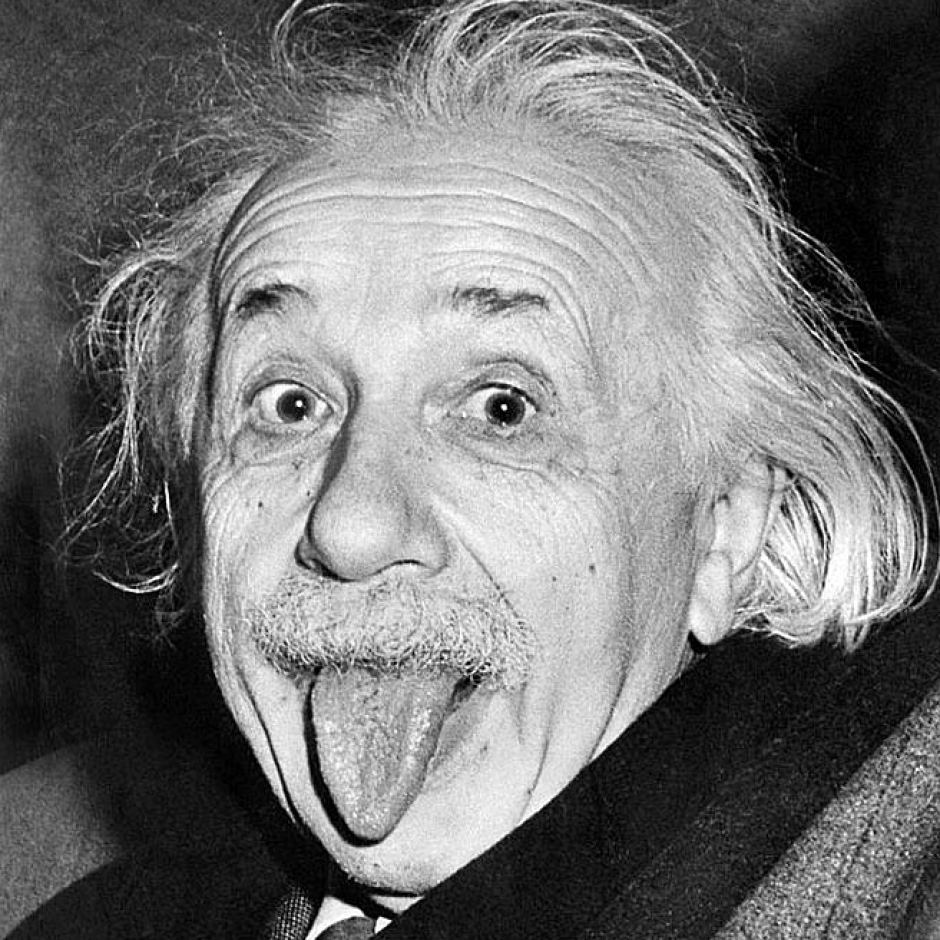
Yes, people might call you an idiot and laugh in your face. Yes, you might epically fail, but that is what helps build identity and success. If you have never failed, how can you learn? How can you possibly grow? A wise guy once said, “A person who never made a mistake never tried anything new.” That wise guy is the one and only Albert Einstein! 

url-3-10tjli1

Einstein_laughing

(Http://d3u5xmnnxiuz0w.cloud front.net/wp-content/uploads/2014/01/albert-einstein-02.jpg)

(www.deism.com/images/Einstein_laughing.jpeg)

Albert Einstein, who is often times considered the smartest man in the world, believed in creativity and knowledge. He believed that both were needed for success. In this case, and many others, he was correct. Well, sort of. Not all jobs need creativity or knowledge, but for engineering, you need both. If you do not have knowledge, you could waste your time or possibly kill yourself doing stupid things. Some people lose their creativity as they age, but my question for you is why. Why do people lose their creativity? Why is creativity and imagination considered childish? What I have learned in my PLTW class is that you need to balance out work and play. If you are too busy to play, have fun while you work. I am one of those people who can even be creative with algebra. I make my work paper into a puzzle, basically.

CHALLENGE!!!!

My challenge for you is to find another purpose for 10 things this week. Be silly and creative with this. Let your inner child out and play. Use a pencil for a sword fight, a piece of fabric for a belt, and I think that’s enough examples. I’m going to leave you and your brains to think about what could be “misused.”

Well, keep calm and dream on,

Regina S.

Creativity in Engineering

Hello fellow engineers, artists, and others,
A question may be floating around in your minds. You might be thinking, “How can I be creative with boring old engineering?” Engineering is actually largely creativity and open-mindedness. You need to be able to look at something and think, “What if…”  You need to see something and think of what it could be used for or could be transformed into. In order to create something new, you need to be able to bend reality and materials in your mind and think of other worldly ideas. One seemingly idiotic idea could be revolutionary. You never know.
Yes, people might call you an idiot and laugh in your face. Yes, you might epically fail, but that is what helps build identity and success. If you have never failed, how can you learn? How can you possibly grow? A wise guy once said, “A person who never made a mistake never tried anything new.” That wise guy is the one and only Albert Einstein!
einstein
Einstein_laughing
Albert Einstein, who is often times considered the smartest man in the world, believed in creativity and knowledge. He believed that both were needed for success. In this case, and many others, he was correct. Well, sort of. Not all jobs need creativity or knowledge, but for engineering, you need both. If you do not have knowledge, you could waste your time or possibly injure yourself doing stupid things. Some people lose their creativity as they age, but my question for you is why. Why do people lose their creativity? Why are creativity and imagination considered childish?
What I have learned in my PLTW class is that you need to balance out work and play. If you are too busy to play, have fun while you work. I am one of those people who can even be creative with algebra. I make my work paper into a puzzle, basically.
CHALLENGE!!!!
My challenge for you is to find 10 things this week and find another purpose for them. Be silly and creative with this. Let your inner child out and play. Use a pencil for a sword fight, a piece of fabric for a belt, and I think that’s enough examples. I’m going to leave you and your brains to think about what could be “misused.”
Keep calm and dream on,
Regina S.

Baby you light up my world like an LED light

This last module I completed was all about computer science. While starting this module I was feeling really uneasy about it. I kept thinking, “Well isn’t computer science all about programming? Isn’t that hard? Seems geeky, I’m not sure if I want to do this anymore.” I was extremely wrong.

Our first challenge was to come up with a definition of computer science. We had to think of “simple computers” and “complex computers.” Simple computers to us were a calculator, sewing machine and a cash register. Complex computers were a MacBook, smartphone and a GPS. What they all had in common was that they all function, programmed with a set of instructions and ran on electricity.

Then our second challenge was to make something out of the Little Bits. Little Bits are little tiny pieces that you put together to make a circuit. There are pieces that you can connect so they light up, make noise, move on a small engine or make it all happen at once. There was a little guide so we got the hang of using the pieces or how to put the pieces together to make it do a specific task. Out of my entire group, I think I enjoyed them the most. Every 20 minutes I would be asked, “Hey Emi, what did you make this time?” Occasionally they would have me take a break due to the battery being extremely hot. Having to choose one thing to turn in was rough, the possibilities were literally endless!

We ended up turning in a lion made out of paper and plastic with it’s mouth open so a LED light that was programmed would be on so it would look like it was roaring. Cute right? It wasn’t necessarily life changing or necessary to life but we incorporated the ideas of technology and art which are two major factors of this class.

And to wrap this up with an update on our maker project, it was approved! Yay!!! Our idea is to have a t-shirt with LED lights that will turn on to make a pattern. Our pattern is a rainbow. “Why a rainbow?”, you might ask. We are planning to focus our project around a social issue, LGBTQ (Lesbian, Gay, Bisexual, Transgender and Questioning/Queer) rights. There is a GSA (Gay Straight Alliance) club at our school that we are hoping will partner with us and support our project. I can’t tell you guys so much just yet, but once we get farther along, expect the most and best! Happy making!

attachment_56265951
-Emi G.

Little Bits

For this module we used Little Bits. We used this to create a little lion with a light bulb in its mouth. To prepare for the challenge of creating the lion, we had to work with the little bits for about an hour to become familiar with the parts. Then we had to design a product that would use the technology of Little Bits to make it move in some way.

Practicing with the Little Bits took some getting used to. It was hard to understand all the different ways that you could combine the different pieces. It was hard to just dive in and begin working with them. One of the first things our group created was a tickle machine, which had a battery attached to some pieces that would move quickly back and forth, like a windshield wiper. We then inserted a feather to this, so that way if you put it near someone it would tickle them. Using this same parts, we removed the feather and put a paper hand over the part. This made it into a waving hand. There are thousands of ways to manipulate the Little Bits, you just have to get creative with the final outcome.

Our challenge 2 creating with the little bits was a small lion with its mouth open. In the mouth, we had fit a small LED light, so it would appear that the lion is roaring. We attached a colorful lion head to a small plastic box. We then put all of the Little Bits into the box, so they were safely tucked away. It took us a while to come up with a fun, and cool idea. We wanted it to be simple but thoughtful. We bounced a couple of ideas around, but this is the final one we decided on.

I’m glad we decided on our lion because it combined two very important ideas: Art and technology. I think it is important to have these two concepts hand in hand, because you need one to have the other. You have to have the creativity of the art, to go along with the innovation of technology. With the newly created STEAM acronym, we wanted to put some focus on the Art. I think it shows clearly in our work.

IMG_6500 (1)

For our maker project which my group will be starting next week, we will continue to combine technology with different ideas. We want to combine fashion and technology, to have unique outcome. Details are to come with our final project, but we hope that it will be like our final module: interesting, fun, and fresh.


-Georgia H.

Change Happens

Update on my Make-O-Roma project. The organizer thing is long gone. I still want to build a piece of furniture but I wanted something that would be bigger. I still wanted to do something that helps to make bathrooms more organized and clean looking. Then, I am making a whole cabinet that can be used in several ways.

Ways to use:

-As a Dresser

-As a Desk

-As a Vanity (My favorite).

I like for everything to have a place that I can remember or if I forget and can’t find something I can easily find when looking. So far, I have made a prototype that came out almost exactly how I wanted. Considering I have never built Vanity before it looked really good.

20150322_104728

With the exception that I forget to consider the assembly process. I didn’t think how each piece was going to fit together and which piece goes on top of which.  That is way prototypes are awesome. I smoothed out all my flaws before i could mess up big time on the final piece. I really like design and construction, which for so reason surprised me. Finding something that you are good and you like makes you feel really good. Make you feel you are worth something. With this project so far i have had some really enjoyable moments after I overcome a challenge. Challenges are what keeps me going.  

Then another change was upon. I realized I was shooting a little to high. I found a better project that fits me better. I wanted something crafty, fun, cute. I have finally found THE project. Cute animal step stools that have engraved with details. 

Savannah Currey

When I’m Older… (By:Yenifer De Lara Gutierrez)

I want to be an architect.

I want to prove to the world females are capable of great things. I want to prove females are equal, or slightly better than men. It’s possible. Some women have already proved or surpassed the standards. I’ve heard that there’s going to be many job and/or career opportunities involving engineering…

You’re probably asking ‘What does this have to do with PLTW class?’ My answer; everything… well, pretty much just the engineering module. The fact that The Ann Richards School focuses on STEM and stuff symbolizes something: its important. Where’s the importance without the attention?

Engineering (and sciences and arts) are fused with architecture. Based on research, just about all famous and well-known architects happen to be men. I think female architects may attract more attention but just because of the gender. There really haven’t been any major, great female architects. Its sad and amazing at the same time. Sad because women haven’t played a big role in architecture. Amazing because there are endless possibilities to how the modern world would look like if there was a balanced ratio of women and men in the profession of architecture.

All in all, I’m thankful for the special class ARS offers. I see PLTW as somewhat of an advantage. I, myself, feel special being in PLTW. Its like I have that toy that no other kid has. That light bulb no one can turn on. That shoe no one can afford. That grade no one can achieve. That dream no one can touch. But you.

Coming Up With the Perfect Maker Project Idea by Claudia Luong

It was hard to choose an idea for my maker project. My group spent over a month contemplating what idea we should choose. At first, we thought computer programming was going to be too difficult and expensive so we were leaning toward the idea of a checker board game, which wasn’t as complicated as computer programming.

We knew we wanted a project that dealt with computer programming and fashion. We combined these two ideas and came up with a shirt that is programmed to light up certain colors or at certain times. P.L.T.W (project lead the way) is all about being handed a problem and finding ways to solve it. Our group thought about the idea of gay rights. Using a symbol like rainbows or something colorful would be a fun design to put on a shirt.


A week after we came up with our maker project idea, an organization that supports and talks about same sex relationships came to our school, LGBTQ (Lesbian, Gay, Bisexual, Transexual, Queer), we were introduced into new ideas that we didn’t think about. Like how your actions, appearance can say so much about you and how people would treat you different based on if you’re not wearing the stereotypical thing.


When intel came into talk to us, they had so many questions after we told them our plan and idea. Question after question, and answers we didn’t know the answers to, but were figuring out. They were telling us things that we haven’t thought about, but were helpful. Like, what technology we were going to use to program the lights? LED lights?


Overall, I think the idea is going to be the hardest part, but as I’m seeing Mrs.Sauter ordering the materials and finding the answers to the questions, I’m feeling better at this project.

Inspired by:

AR Sandbox

Recently everyone in the 8th grade had to complete an application for a major project that they were to create in the Makerspace, or complete an application to join a project that is already in motion. All types of project requests were submitted: a give a bunny project, a makeup tutorial project, someone wanted to create a standing vanity, and another wanted to create a sliding front closet, all of the ideas were unique in their own ways.

When we were first told that we had to create a project in the Makerspace, I wanted to create a video game; coding. Then I wanted to create an all natural cosmetic with my friends. We changed our minds and decided to work on a series of makeup tutorials that would teach girls how to recreate famous looks, from people like Beyoncé, Taylor Swift, Kesha, and more. As we were working out the kinks in that project, our teacher Ms. Sauter, sent out an email for the girls that had not yet decided on what project they wanted to work on/enter in. There were three options on it:

  1. To work on an augmented reality project, that would be an extension of a topographic map project that we did earlier in the year.
  2. To create a fully functioning skateboard that eventually all the 8th graders would do.
  3. And lastly to enter google’s annual science fair.

One of the projects caught my eye: the augmented reality topographic map, and the more I read about it the cooler it sounded, so I decided to do that instead of the makeup tutorial with my friends.

Of course now that I had decided to do something I had to fill out my application, which meant… numbers and more research. Yay. But I’m glad that I decided to do the extra research because otherwise I would be bad off when I started to actually build the sandbox. I’ll get into technicalities later.

Let me tell you what an AR Sandbox is. It is an interactive topographic map, that basically means that when you change the way the sand lays inside the sandbox, the information is picked up by the 3D sensor above the sandbox, which is transferred via cable to a computer that has been set up with the correct programs to adjust to the shifting sand. From there the new image is sent to a projector, which projects the updated topographic map onto the sand within seconds. So it is really pretty cool, no matter how it sounds.

A diagram of how an AR Sandbox is set up.

What an AR Sandbox looks like when it is in full working order.

You would think that something like would take a lot of time, and a lot of effort, and it probably will. It also takes a lot of money, and here we find one of the things that I didn’t know about until after I researched all about the AR Sandbox. You are supposed to have a very good graphics card one that can handle the strain that processing the images takes, so if you have a low performance graphics card, your sandbox, well… It won’t work like you want it to. And high performance graphics cards are expensive, so this project really racks up in cost.

So even though this project is very hands on, and is kind of expensive, it still seems like a lot of fun. I am looking forward to completing it, and letting the girls at school play with it for as long as it lasts.

~Almina Orbach ヽ(*’(OO)’)ノ

Simulation Applications in Medicine

Lestle SotoUS_Life-Expectancy_maps

In our PLTW class every two weeks we get in a group and start a new module. This process is awesome because it allows for growth and it lets us try a new thing every two weeks and explore our points of interest. Every module relates to the pathways our school has, media tech, biomedical, and engineering. All of our pathways reach out to all different types of people, chances are you’ll find something you enjoy in one of these or multiple of these pathways.

The latest module I did was a module with my partner in the biomedical field. That module was simulation applications in medicine. At first I didn’t really show much interest in this field, because usually things having to do with medicine freak me out. But when I really started exploring this field I found it quite interesting.

For challenge one of this module I had to watch a video relating to future medicine and simulations and how the FDA is reacting to it. In the video what really motivated the FDA to explore simulations more thoroughly is the precision and accuracy that comes along with simulations. Most man made machines and innovations can’t do what computer software can, and bioengineers are just now realizing that. Through the simulations it has been helping them refine their ideas a lot faster and reduce the cost of testing and prototyping, which adds up very quickly.

The simulations are also very precise in measuring and comparing geometric designs, implant sizes, and next generation designs. It’s tough making a medical device that fulfills everyone’s needs, the simulations are the closest bioengineers have come to doing that thus far. A result of the precise simulations lately is that they have been getting tons of submissions for new medical devices. I don’t believe simulations will be the only way we test medical devices and procedures. I just think it will probably be one of the more efficient, accurate, and faster ways. Technology and innovations advance severely at an increasing rate, new ideas are sought everyday. I just hope as technology advances medicine innovations will be in a big way a part of that.

For challenge two of this module my partner and I had to pick a simulation to explore that had to do with future medicine and life sciences. My partner and I picked life expectancy in the U.S. population. The purpose of our simulation was to look at the increasing and decreasing life expectancy rates for the U.S. population. By looking at that we got a better feel of what to expect in the future for certain groups of people and their death rates in certain times and places. We could also be preventing deaths and stopping them and getting the right medicines for cardiovascular disease since that is a huge cause of death. We should also keep track of our humanity’s iron intake.

By doing this project we found some statistics for women. The average life expectancy for females in the United States, is 81.17. That statistic is almost 6 years longer than the average for men, go women! At age 80 women have a 60% survival rate. The state with the highest life expectancy rate for women is Hawaii, that statistic is 84.83. The state with the lowest rate for women is West Virginia (78.09).

We also found some statistics for men. The average life expectancy for males in the United States is 75.96.That’s almost 6 years less than the average women survival rate. At age 80 men have a 45% survival rate. The state with the highest life expectancy for men is Minnesota with an average of 78.32. The state with the lowest life expectancy for men is Mississippi with an average of 71.26.

For this module we also looked at statistics for female races. The race with the highest life expectancy overall for women is the Asian American race (89.67). The race with the lowest life expectancy for women is the African American race (77.57). Then we found statistics for male races, the race with the highest life expectancy for men is the Asian American race (84.56). The race with the lowest life expectancy is the African American race (70.68).

The last thing we did for this module was predict future life expectancy for females and males. I predict that females will ultimately live the rest of their lives longer than men. The reason most researchers say women live longer than men is because they develop cardiovascular disease, like heart attack and stroke later than men. Women develop these problems usually in their 70s and 80s, usually 10 years later than men, who develop them in their 50s and 60s. Iron is the main reason men develop diseases earlier than women, their iron intake is extremely high. If this rate continues then women are bound to live longer. I also predict that there will be many  technological advances for future medicine.

My partner and I also predicted that males will not live as long as females because it is scientifically proven that men develop health problems about 10 years before women. As I was researching I found out that, “For every 1,000 men who have cardiovascular problems between the age of 55 and 65, there are only 25 women in the same situation,” says Amy Thompson, senior cardiac nurse in the British Heart Foundation. So according to the research I have done I predict that men will not live as long as women because of these health problems that men will develop over the years.