Safety using a Miter Saw

Hey Guys,

As many of you know, at ARS, we have a Project Lead the Way (PLTW) class. In PLTW, we learn many useful things that can help us decide what to do with our lives. One of those things is learning about tools, how to use them, and what they are used for.  One of the tools we learned about is called the miter saw.

To use the miter saw you will need:

  • eye protection
  • ear protection
  • something to cut
  • a clamp
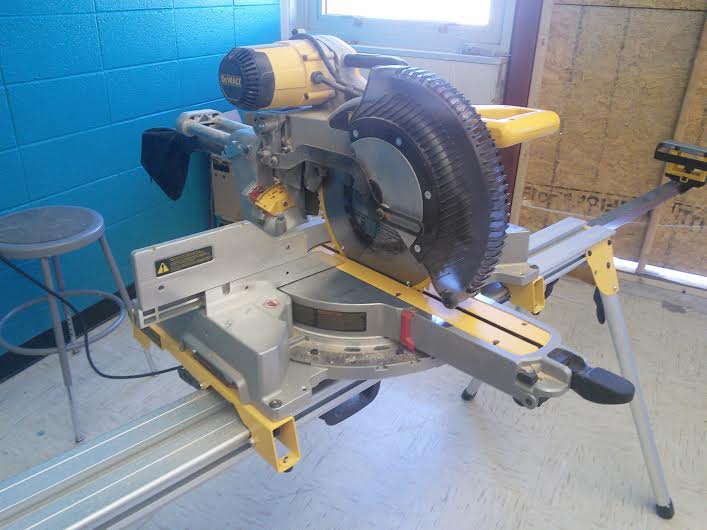
  • When you first go to the miter saw, the arm will be down. To lift it up, push the arm down and look on the left side of the miter saw. There should be a silver pin. Pull the pin while pushing down on the arm, and the arm should come up. Next, you will need to make sure the miter saw is at the angle you want it at. The angles will be marked with red. When all the angles are at the correct positions, clamp down the wood you would like to cut. Make sure the saw is going to cut in the correct place. To do this, bring down the saw about halfway. There should be a shadow. The shadow will show you where the saw will cut. When the saw is ready and the wood is clamped where it needs to be, put on your eye and ear protection. Then, put your non-dominant hand somewhere that it will not be cut, and your dominant hand on the saw handle. Pull the trigger while pulling the saw arm down. Cut through the wood. When the wood is cut, pull the arm back up and release the trigger at the same time. Take the cut wood off of the saw, and unclamp the other wood. Take the wood off the saw. Pull down the arm and push in the pin. Take off your eye and ear protection. Make sure everything is cleaned up and put away in the correct places, and then you are done.

Using power tools is really fun, but only if you aren’t rushing to the hospital because you didn’t use basic safety. Please use goggles and ear protection when using power tools and be sure to keep your hands, feet, head, hair, and anything else you would like to keep, away from the moving parts of the tools.

Have fun and saw on,

Regina S.
Growing Up Through the Lens

images-2

My dad's fight to battle cancer. My dad’s fight to battle cancer.

Growing Up Through the Lens

Hello internet!
For my second module, my group and I decided to do photography. We built a pin hole camera and learned a little bit about the history of photography. During this module, I was thinking about my dad a lot and his job as a photographer and filmaker. So, for my blog this six weeks, I decided to write about my dad, a true inspiration.

My dad is a professional photographer and is an independent filmaker. Growing up, I was surrounded by cameras. Kodaks, Polaroids, Digital, etc. In my younger years, I would travel with my dad all around the country and see him capture beautiful photos. I would go to work with him a lot. Watching my dad snap photos and record videos made me realize that he truly loved his his job. Photography and filmaking wasn’t ever boring to him, and he never did it for the money. I look up to my dad as a rolemodel, not only in career choices, but in life. I want to live a life, where I’m doing what I love and taking control.

Yours truly,

Effy Shapter

My Dads website: http://www.andrewshapter.com/

Not Just Weekend Warriors

By: Savannah C

Magical Tool Box

Magical Tool Box

Many people refer to us as “Weekend Warriors” We are the home improvers and the weekend fixer uppers. I am working on the Construction Basics Module in PLTW. We are working with advanced tools that are intimidating just to look at. Scary. Big. Dangerous. Remember the time you helped your dad work on his car or fix the squeaky cabinet? Again we are getting handy with our tools.

The other day we ran into some trouble getting a nut on a bolt. The stupid thing would not go on. A classmate jokingly said, “This is why we should let the guys do this stuff.”  Though, she meant no harm by it, it got me thinking. No, that is not the way we should think, we belittle ourselves sometimes. This class is a way to show us that this is not true! Mrs.Sauter and Ms.Deeter have worked hard to show us how to use this scary and intimidating equipment.

Right Angle Birdhouse

Right Angle Birdhouse

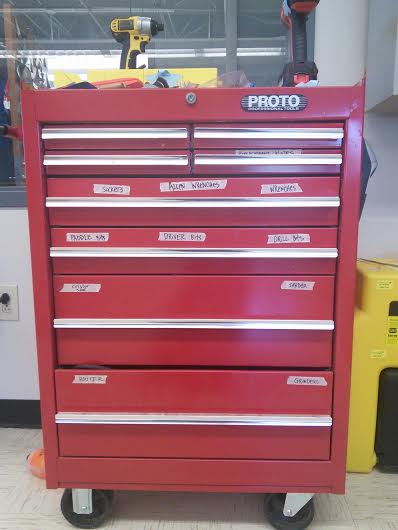
The sound is the most intimidating but, that is what ear protection is for. That, and so you won’t hurt your ears. We use  miter saws, jigsaws, drills, finish/brad nailers and so many other tools. Do you know how many tools there are? Too many to count, I would say thousands. We did a activity to name all the tools in the tool box. We know the names of almost all of them.  We were all so proud.

We are building a Right Angle Birdhouse . This was used to introduce use to sawing straight cuts and using a brad nailer. We have a blast with the designing and construction of our creations. We are empowered  to try something new and intimidating.  The tools in our hands make us feel powerful.  Our class wants to use them. We do everyday. As a whole our PLTW class is loving what we are doing.

Wonderful Chopper

Wonderful Chopper

Don’t let anyone tell you what you can and can’t do, only you know what you are capable of. Or, maybe not in that case, it can’t hurt to try it. So roll up your sleeves, get out there, and don’t be afraid to get dirty. Or mess up. Go ahead make mistakes.

Responsibility

One thing that all of us in this class enjoy is the freedom we get and the responsibility we have because of that. My favorite part is that our teacher trusts us to be able to do our work and not be a micromanager. It creates a really fun and easygoing environment to work in! PLTW is class where we get to create things, and its really nice to have freedom with what we create. We love being able to creatively express ourselves and not have to hold back with the usual restraints of a classroom.

Our teacher puts her trust in us to make sure we finish each of our modules on time. We almost always do- because we have that responsibility. The moment you walk into the room, you possess lots of responsibility. We are responsible for doing our work, keeping the space clean, and all of our equipment. Some people may think that we have a lot of rules, but it never feels like many. We always get to have an independent choice of what we want to do. It is our responsibility to make the right choice.

We have to be productive and efficient to complete our modules on time. We have to be mindful not to waste too much class time, making sure to balance fun with work. Our teacher trusts us to be able to do our work on time, without much help. Because she usually helping other people with module, we have to be careful with our time and stay focused. Some days this can be challenging, because you just want to not do work. But we always get everything done and on time, because that’s what we do!

The reason why we like being this environment is because we feel we have more choice and freedom, compared to if we had the typical-teacher led class. In this class Mrs. Sauter will just give us a due date for the challenge we are currently on, and leave us be until someone needs her help or she feels she needs to help. Compared to the other teacher lead classes we are required to take, this one is pretty much stress-free. With other classes, there are lots of due dates and stress. In this class, we can do it on our own time, and do it mainly in class, and not have any homework.

We have responsibility of everything PLTW. You name it: the classroom itself, everything in it; chairs, tables, books, supplies (etc). The most important objects to take care of are the materials and tools that are in the Makerspace. The Makerspace is an area for us students, and teachers, to create anything! We received a grant last year, and with that money, we created the Makerspace! At the end of this year, we have to have created something great, because thats what we promised to the granters. The granters knew that we were the destined students to spend their money well. We are the ones. We are the chosen! Hallelujah. If we please the granters, maybe they will give us money again, next year, for the next upcoming 8th graders. They will continue our “legacy”.

Overall, we like this class because we have responsibility. We know what we need to do, and so we do it. Having freedom makes this class so much better, being able to be independent. I think we take good care of the space, and we do our work. As long as we follow the rules and do our work, then we are good! – Georgia H., Araveea W., Yenifer D., Alyssa D. 🙂

DSLR Cameras VS Digital Cameras

So in GTT I am working on a module that involves cameras, it is called Intro To Photography. So far my group hasn’t gotten to the making a pinhole camera part, but we have brainstormed ideas on how to make it. One of the reasons that we picked this module was because one of my group members and I are both in the Photo Journalism elective and we wanted to see how similar the module was going to be according to our experience with cameras. The module so far is actually pretty different to what I am accustomed to when I deal with cameras, so I decided to talk about my experiences with DSLR cameras versus digital cameras (compared to yummy pie and cake).

There are many types of cameras and they all look as different or similar to each other as pie and cake. There are digital cameras:

Digital Camera

Digital Camera

and DSLR cameras:

Nikon DSLR Camera d3100

Nikon DSLR Camera d3100

and they can both take quality pictures, just like how cake and pie are both delicious. They both have an aperture (the size of the hole in the lens, affects light and depth of field), an ISO setting (how sensitive the camera shutter is to light, affects grain and light) and shutter speed (how fast the shutter opens and closes, affects blur and light), like how both pie and cake are both baked yumminess.

But like pie and cake, DSLR cameras and digital cameras also have their differences. Digital cameras normally aren’t able to take super high quality photos like DSLR cameras, because they usually don’t have the range of aperture, ISO, and shutter speed that DSLR cameras have. The ranges on a DSLR camera is normally 1.5-36 for aperture (measured in f-stops), 100-6400 for ISO, and 1/4000-30 seconds for shutter speed and digitals are about half of all of those except for ISO. So while digitals do take good photos, DSLRs have more room to mess with the settings to make more beautiful picture.

A picture I took with a DSLR camera

A picture I took with a DSLR camera

Photo taken with a digital camera

Photo taken with a digital camera

Like how cake can come together in a beautiful creation and pie is… well pie is pie.

So, just to say it my favorite camera to use is a DSLR camera because I feel like I can get a better picture out of using it than a digital. Not to say that using a digital camera is bad. It has it’s perks, like how it is way easier to carry around than the bulky DSLR, but that is just my opinion. You could like digital cameras better it just depends on preference. So that is my two cents on digital and DSLR cameras.

Almina Orbach ヽ(*’(OO)’)ノ

What is PLTW?

We’ve been taking this class for two years now, but I doubt any of us know exactly how this class came to be and why it’s so important for us to take it. We can all agree that this class has taught us some important aspects of STEM that will come handy to us in the future. But it’s hard to know exactly how this will help us if we don’t already know why it’s helping us in the first place.

download

The PLTW program was created based off of what our future workforces will hold. Technology has been a big advancement in the last 50 years and will only advance quicker and be integrated in almost every task of our everyday lives. The first school district to integrate this program into their classes, the Shenendehowa Central School District, did so to prepare students to enter the science, technology, engineering, and mathematics (STEM) workforce. By the end of the first year of 1986, the classes were reported successful and grew into a national program by 1998. Gateway To Technology (GTT), was also added for middle school students in 2000. Additional high school programs were added in 2008 (Bio medical Sciences), 2013 (Computer Science), and the elementary school program

download (1)

PLTW Launch was added in 2013. PLTW is now being implemented in over 4,782 schools in at least one in all 50 states and is expected to go as far as 5,200 schools by the end of this year.

With the help of corporations (Toyota Motor Manufacturing) and other endorsements, (Kern Family Foundation, U.S. Secretary of State Hillary Clinton, University of Virginia) this non-profit organization and all of its users have found that more than 70% of PLTW seniors are intending to study engineering, technology, or computer science. We are heading only towards great outcomes that only us in the future can forever appreciate, and it starts with new ideas that build upon one another to invent new ways of thinking and integrating STEM into our everyday lives.

~ McClain 7th period

The Biomedical Field: The Future Medical Technology

It all starts, with what you are interested in. There are a lot of different pathways you could choose from, there is media tech, engineering, and biomedical field. We have chosen the biomedical field because we were interested in learning about how medicine will progress in the next 150 years.


Through this design process we gather information about how medicine will change in the next 150 years. While researching  we learned how medicine will  change so we can live longer and healthier. As we were researching we learned that medical technology is developing  and as it does we will learn how medicine will help us in different ways.

As seen in this picture scientist that study physics and biology are coming up with better ideas on how to take medicine to the next level. For example scientists are coming up with nanorobots that will help cure diseases before birth. This is one of the many things that can be created in 150 years from now. Their purpose is to patrol our bodies and destroy diseases as they are forming. So that


we can have a much cleaner body without diseases, and preventing them to come back. This will help in the future because there won’t be as many people dying of that killer disease. That’s why nanorobots are being created to kill the disease cells that will prevent you from getting sick as well.


Further out scientists  will also create computerized brains. These computerized brains can upload our minds to a computer and live on in a digital form. These brains will be an artificial intelligence


controlled brain. Maybe these brains will be able to help some people with brain damage, so that they can live a better life.

IMG_20141017_081802This is a part of our poster that  shows the top killers and how we are trying to find a cure in the future. These top diseases had been the causes of many deaths in the past years. But now that the technology is getting more advance we will be finding ways to cure diseases. And by our research in the next 150 years all of these diseases could be long gone and will be things of the past. Once these diseases  will be long gone, we will no longer be worry of getting them and we could live longer.

In 150 years from now medicine will be better and it will help us, through this experiment we have learned that  many generations of medicine are going to be develop as time goes on we will get a lot better and it will cure more diseases. There are more things other than the things that we listed that will help make medicine better for future generations. But we still hope you enjoyed and learned more about medicine in the future.

Jennifer, Lucero, Jazmin, Brisi

Are You an Engineer of Tomorrow?

By: Savannah C, Marissa, Natalia, and Fatima

Engineering is the craft of creation. All it takes is an idea,then create something that will improve our everyday life, to make things easier for us, and to improve our existence on this planet. Engineers work to find problems and then create a solution, what a cool job!

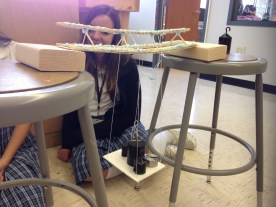
Our group decided to do the Engineering module for different reasons: some wanted to design, create, or build. We felt that this module would suit all of our interests. The main thing we learned through the modules activities of creating a bridge and speaker, was that, when engineering, nothing will go as planned.

There have been many challenges that we have faced among adventures of PLTW (Project Lead The Way). Our 1st challenge as the 8th grade students was to design a speaker that amplifies the sound of a iPhone 5s. During this challenge we used the full design process for the first time. You learn something new everyday! Next, we had to design a bridge to cross the “East River in Manhattan.” The river span was 16” long. The materials were the first challenge. How are we supposed to build a bridge out of toothpicks, string, and school glue? We had no experience in this matter.

IMG_4413.JPG

Analyzing Our Success

Solving problems is a main attribute at The Ann Richards School. We are challenged in school to create prototypes using materials like toothpicks, raisins, news paper and spaghetti to make bridges and towers. Teamwork or collaboration plays a big role in our community, on a larger scale. Students are asked to solve problems everyday. Like, who has what homework for the creation of the bridge? We will soon be introduced to the basics of construction and robotics and the solutions and programming will not just be handed to us. We will imagine ideas and brainstorm solutions.

IMG_4324.JPG

Our Brain-Storming Domain

Everyone, at some point, puts their feet into an engineers shoes. We take on these roles and not even know it. We may not have the title of an engineer but that doesn’t mean that you can’t create or improve solutions to solve everyday problems. We all thoroughly enjoy trying new things through our 8th grade PLTW class.

Looking Into the Future of Media Tech

SAM_0024.jpg

GTT or also known as Gateway To Technology is a class that you take in middle school that lets you explore three different pathways which are media tech, engineering, and bio-med. GTT is a class that leads you to decide what pathway you would like to take when you get to high school. It will lead you to decide what you want to focus on as a preparation for what you will want to study as a career. Engineering is basically more focused on designing,building, and remodeling,. Bio-Med is focused on health and science. Media Tech is a class that you learn how to film, edit movies, draw characters create blogs. A topic that me and my partner will talk more about is cyber bullying that falls under the category media tech.
Media tech is a pathway that you will start thinking of when you are going to enter high school and it will be your permanent decision but a good decision because media tech is a pathway that you can use photography, video making, and a way of “spreading out the word.”
It affects our daily lives today because once you take this pathway, you will know the art of appropriate photography, video-making, and how to do so many other stuff with technology.
Mediatech is involved in almost any job but if you do decide to focus on media tech to be your main career then try to look towards producing,librarian, computer labs officer, movie editor,etc. Any job you would like to take it doesn’t really all have to be directly to mediatech for example you can be a teacher and teach a class of media tech.
When you take this class, you will gain so many skills because (as mentioned before) in life you can become a really good photographer, or even a great typer. i don’t know but these skills will benefit in your everyday life so you will have more knowledge in your technology.
But overall media-tech is a really good pathway to chose if you like to videotape or if you like to edit videos too. I really think that media tech can help you socialize more and communicate over pictures and video’s and other things.Media tech is a good pathway to take because you never now when you might come along a situation when you will need the skills of media tech. Choosing media tech, biomed, or engineering will all be good pathways to choose but definately go towards the pathway that you are more passionate about.
SAM_0023

Inspiration


Have you ever been mentally stuck? It seems your brain can’t think of any ideas and you can’t find any inspiration around you. It’s normal for us to feel this way, given this is how the human mind works. But we also sometimes over-think or miss the best ideas given to us. Our PLTW class, as you know by now, is a very creative-based class, but with creativity comes new ideas. Which is why having a method of inspiration is so important. So as a group, we have decided to explain some ways to inspire yourself, for less wall-staring and more creating.

Inspiration is the stimulation of creative thinking; different ways to motivate you into the world of creating and designing. Sound familiar? That’s because this year’s PLTW class is based on different inspirations you see in the world around you. Whether its confronting a problem in our medical practices or creating an invention to help a specific group of people, or even constructing visual representations to make life easier. That’s the overall goal, right? Ideas inspire new creations, better ways of thinking, to make our lives as humans a little bit better. Obviously nothing is perfect, but more ideas have to be inspired to fix those problems too. Here are some examples of inspiration from our own PLTW classmates.


“Inspiration for me is getting energy from other creative ideas. You can even look up to someone or create personal goals for yourself to get inspiration.” -Olga Hernandez

unnamed

“I get inspiration from having motivation through ideas created around me.” -Alexis Miller

unnamed-1

“Using my imagination helps me get inspiration.” -Lauren Gredicek

unnamed-2

“I always start by giving myself a goal, maybe to correct or fix something. “ -Ginger Rodriguez

unnamed-3

“I love to watch the ways people brainstorm and it always help me with my inspiration.” -Mrs. Sauter


As you can see, imitation is the best form of flattery. By simply people-watching, you can start to create your own ideas to take you in any direction you’d like. Inspiration can come from anywhere, and of course, there are infinite ideas out there waiting to be discovered. If you write, you know that there is a long process into finalizing your overall theme, coming from all sorts of inspirations, especially mentor texts. As an engineer, inspirations can come from observing the problems of our everyday lives, or observing the structures that have already been made. In the medical field, many people educate themselves on the origin of these ideas, to upgrade or correct a practice.

These ideas aren’t guaranteed to work for everyone, which is why we hope we have inspired you to go out and find your own alternatives of inspirations.