Criteria By Elly G.

Throughout school, and even through life in general, we are asked to complete tasks using certain guidelines. But throughout our daily lives; hrules-2ave we ever stopped to ask, “why do we have to follow these rules set for me?” Of course we all may answer, “because if not I’ll get fired” or “I’ll get a bad grade” but overall, why are these standards set?


Looking back through my first years in grade school, I could say it started as getting a colorinca822ff2784ebc54e1d9780c1ba1cea4g sheet with numbers in certain spaces, and being asked to color that space a color based on the color-to-number corresponding key. When asked, I would do so point-blank. Reaching 4th grade I was assigned that same activity for homework. When there was a number “4” on the grass space, and the corresponding color to four was green, I questioned my teachers theory. I turned to my father, being the realist that he had raised, and asked him why the grass was supposed to be colored green when everyone knows that grass is brown in Texas. To my response doing my homework my father said, “If that’s the way the teacher asked for it, then you should just color it green.” So beginning then, I had did as I was told and always followed the criteria.


After getting older and realizing “rebellion” is certainly common in our generation, I thought about criteria and took it into more depth. Now in 8th grade, when you are assigned to something, you are given some form of guideline. Expected to follow that criteria, you are graded/analyzed on what, or how much of the guidelines you follow. But that should not define you. Constantly we are placed in a chart that falls under certain categories, and that makes “who we are” or “shapes our character” only because we have the given ability to be able to follow instructions.

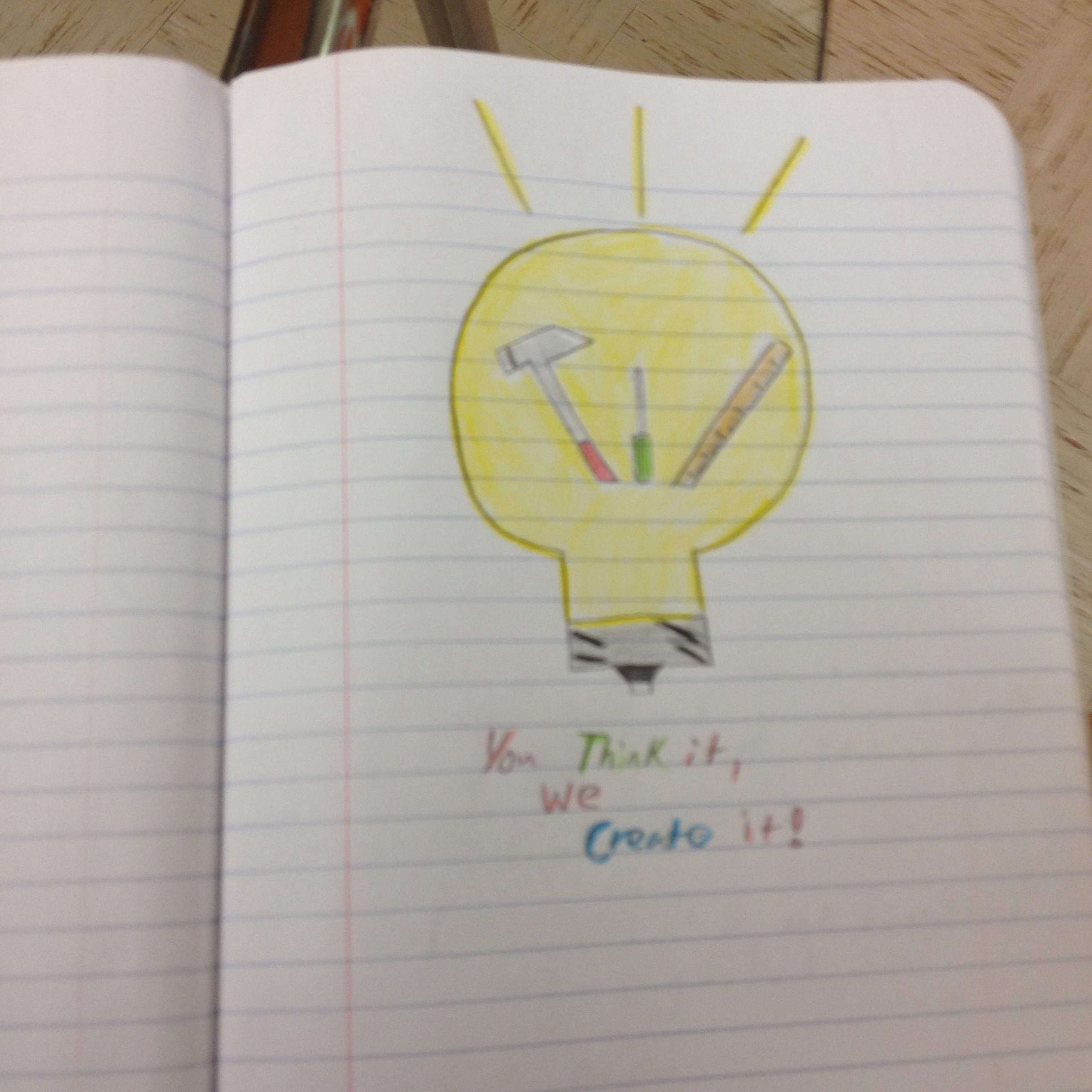
breaking-rules     Following my thoughts came anger and realization. When Thomas Edison invented the lightbulb, he did not follow a rubric or criteria telling if he failed, he would get an “F” in science class. Overall the lesson I’ve learned throughout my years in school is that a grade, or the way that you follow directions should not define who you are as a person. When children become adults and start a life of their own, there will be no rubric labeled as “how to ace your life” You will be left with your pure imagination, and that’s where the real ideas come from naturally.

PLTW? PLTW. By: Sierra Green

At my school there is a class called “Project Lead The Way” (PLTW). In previous years (in this class) we did different things like building and engineering. This year we are doing things related to the different pathways like biomed, engineering, media technology, etc. I have really liked all of the different projects (modules) we have done so far in the year, but overall I have to say that my favorite module is the media tech one.

In this media technology module, we were asked to make a video about a certain type of technology that we think there will be in the future (10 years from now, 20 years from now, 50 years from now, etc.). My group thought that the hologram will be a thing in the future. So, with this idea we had started brainstorming all these different types of things we could put in our video. Eventually, we decided to make our video about 2 girls who lived far away from each other and wanted to talk face to face. The girls in our video used the hologram.

We had to do this long process before we could actually do the video part of the module. First (after we came up with the technology we wanted to use), we made a design brief. This design brief included our client , the designer , a problem statement (a statement describing what the problem was and how we were going to be able to fix the problem with our device), a design statement, and deliverables (what our device will do once we are done).

Next we made a storyboard. The storyboard was just a paper that described what we would be doing in each of the different parts of our video. Once we had finished this part of the process, we were ready to do the most fun part! Making the video!

After taking what seemed like forever to do, we finally finished the video for media technology. We edited, added voice, and added music to our finished video using iMovie on the computers. My team and I are pretty proud of this creation we made. Keep in mind that this was not easy to do.

Anyways, PLTW is a very fun class. It allows you to explore different pathways basically on your own. It helps you get ready for any kind of career you you want to have in the future. This class gives you a taste of  lots of careers. I have learned the basics of each pathway and I have learned what you will have to know and what you will have to do in each pathway.

This is our video we made:

http://youtu.be/6_rvaI1R8oQ

How Do We Go Around? By Olga H.

In our class we have two different stations. One is a room full with computers, which Iimage-2 call “mini computer lab.” And next to our mini computer lab we have the makerspace, which is where everything is at, all the fancy, scary tools. Which are really dangerous but we have our amazing teacher, Mrs.Sauter which has given us lessons on how to use them the correctly.
Hopefully you are asking yourself, “For what do they use each room?” Well the mini computer lab, is used for either research or for you to do your presentation. It all depends on what module you are doing. It is either based more on what module you have. It will tell you if you are in the mini computer lab, or if in the makerspace. And in the makerspace we do all the building. Unfortunately for me I haven’t gotten a module where I have timageo go to the makerspace. I have only had modules where, I make presentations, which for me is fine, because I love making presentations. But hopefully my next module will be in the maker-space.
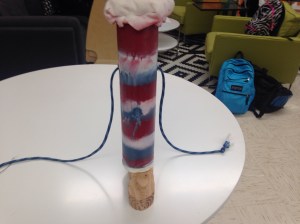
 My class, Class of 2019, was the first class to use the maker-space!! We were all ready excited to use the maker-space, because we knew everything was going to be easier to do. I tell people they should go into the maker-space because it’s always fun to see a really neat colorful room(s). And you could see it in pictures right now!!

 When I come to class, GTT2, I’m always excited because I know that we will do something different each day. And learn something new each day. But I sometimes question, if there are other middle schools that have this. Yes, there might be other schools that have a maker-space, but there is no other school that has them together. Also we care for it, as if it was our own room in our house. But there aren’t other school where they have that much respect, for one place and they keep it clean.

image
And to make it more exciting, we are even going to have our own garage. And I mean, no other school has that!! When I think of, I am glad that I attend this school, because we have so many opportunities, that other might not get, and we use them to our best.

Building a Prosthetic Leg

In the bio-med module, there are different tasks for students to perform. In this module,biomed, my team decided to work in the prosthetic unit. In the unit, we had the task of building a prosthetic leg. Building the leg, involved the building process, which includes sketching the design and creating a design brief. In the design brief, we recognize the constraints of our design and what our design’s deliverables are. As for constraints we include materials, time, etc. and for our deliverables we include examples of support,comfort, etc. for our design.

In this unit, it is up to us how our leg will look, feel, and work. Once we are done with our design brief, then we take our design to our workshop area. Then, we find our materials and get to work. With my team’s leg, we used a pipe as our leg, wood that was cut to portray a foot, cotton pieces for comfort, and a rope to tie around the “limb”. Our materials we chose would have to commit to how the leg would work, such as the wooden foot would be the support, as the cotton would be the “comfort” for the user, as said before. When building, there is a lot of revising that comes along with it, because what might have been expected to work, might not work after all. In the end though, our leg came out even better than planned. Through this module, it showed me that there can be a balance between two of my favorite modules, bio med and engineering.

by Arianna Nunez

image

Maker Space- Engineering Process

Process

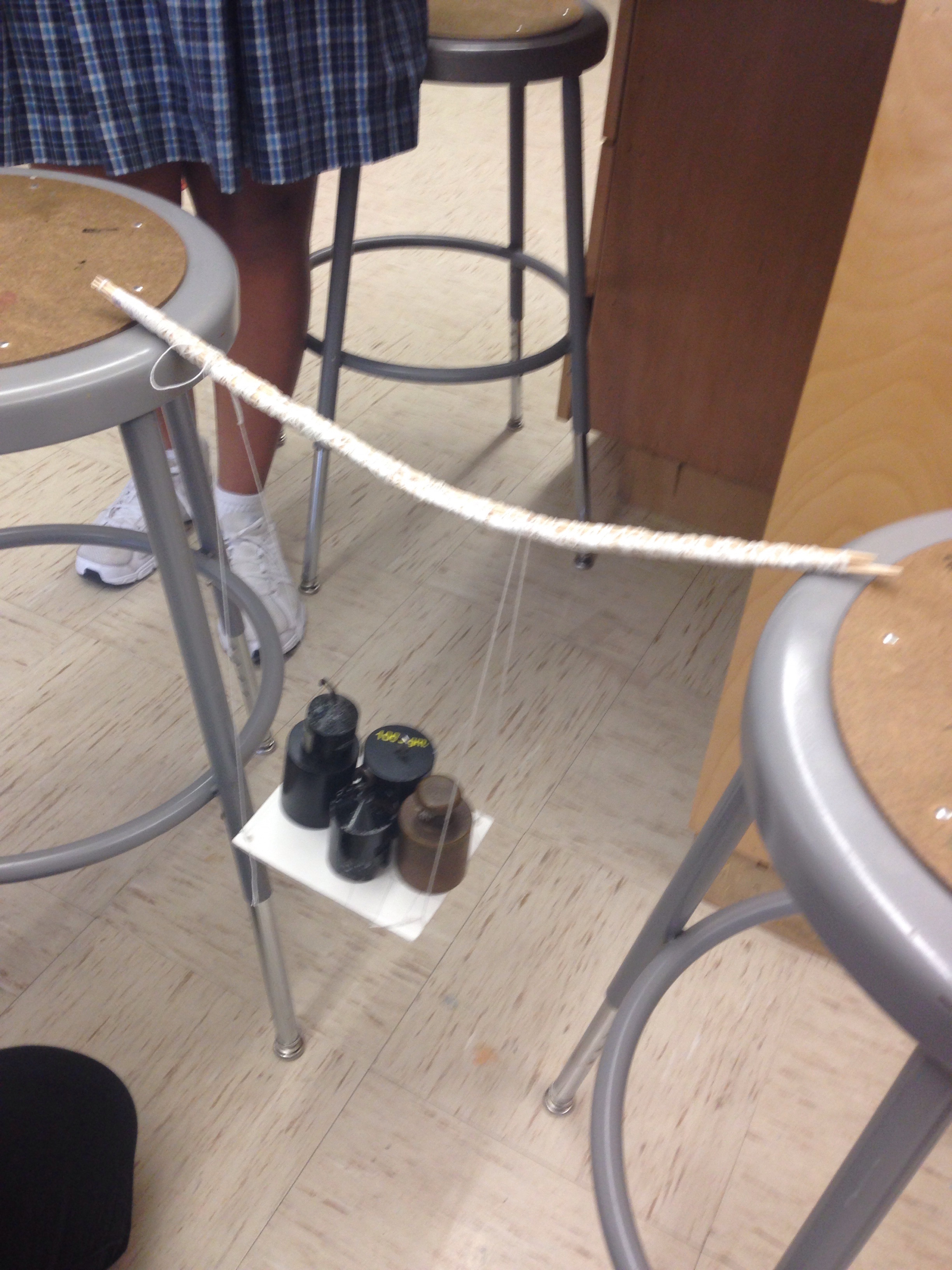
The process of making this bridge was not an easy one. We had to only use toothpicks, string and glue. It had to be under 40g and a minimum of 16 inches long. We had to throw away our bridge and redo it about 5 times. We could never get it under 40g without it being too weak. But by using skills we learned from STEM we came up with a new and improved plan. We decided that we should stack the toothpicks in a brick like form then wrap it in string for extra support. Lastly was added glue in almost every crack so when it dried it would all stick together and be strong and sturdy. When we tested it it held 3,700g! We were very surprised that our bridge that we had that much, we were really surprised and happy!!  

image

What We Learned

By doing this module we surprisingly learned a lot of different skills that could help us in the future with school, and really anything and everything else we do in life. We learned that it’s okay to make mistakes. It’s okay to mess up sometimes, in our case 5 times, because each time you learn from your mistakes and you keep getting better and better. Our bridge was stronger and stronger each time and in the end we had a very well built bridge. It was hard sometimes and we wanted to give up but we didn’t and thats what counts!


Engineering Fun!


This module was so much fun. I loved working with my team and getting to know everybody better. We learned some of our strengths and weaknesses as people and that was really an eye opener. A lot of us also realized that engineering is possibly a pathway that we want to take because it is so much fun and really pushes you to work hard. Engineering was a lot of fun because it really opened our minds and made us think outside of the box!!

Zoe Renteria and Maddie Irwin!!

How can Media Technology help our daily lives?

What is PLTW?

By: Prisila Samaniego-Marin 

PLTW is a class we take at ARS. In this class, we do modules which are based off the pathways that we can take in high school. Next semester, we will create a design of something that is useful and then build it. So far, this class has been fun and less stressful than most. In this class, we take things at our own pace, but still get things done. I like this class because it’s a bit more independent and you get to choose what you want to do and you get a chance to try new things.


So far, I’ve done 3 modules and I’m working on the fourth one. The first module was based off the media tech pathway. This module was to create a video on something that we came up with that can make your life easier. We designed an iPod Locker. The iPod Locker is a locker where you enter your “locker combination” into an iPod instead of an actual lock. We believe this will make students’ lives easier because they won’t have to go through the struggle of turning the lock to open up their locker. The iPod will be connected to the locker with wires so they can work together to open up the locker.


In order to be successful in this class, you have to manage your time well and know when things are due. Even if you do get off track for a while, you have time to finish if you know when it’s time to get back to work. This class has its challenges like actually building things or thinking outside the box. If you try hard though, you can do anything in this class. This class is whatever you make of it; it can either be the easiest thing ever or the most difficult thing you’ll ever do.


Prosthetics: Who says you need a PHD (Rebecca B.)

This year, in my Project Lead The Way Class (aka PLTW), I have learned so many new things. I think it’s really cool how the class is really laid back, and we kind of do things on our own time, yet we get so much done, and learn so much. The modules we do- it’s like we are inventing and creating new things every week. We are creatively designing new things to make the world an even better place, and I think it’s really cool. I also think the new MakerSpace we’ve been granted is an amazing environment to work in, and it’s a lot of fun.


One of the modules I’ve worked on really stood out to me- Prosthetic limbs. This module took a little longer than the rest, because it was a bit more difficult. For this module, the first part of it was to take away an ability or limb (eyesight, leg, arm, etc.) for 5 minutes. I thought this would be something that would be really easy, but I was proved wrong.   The first time, I took away my eyesight by closing my eyes. I tried walking around the room without being able to see, but it was not easy, and a bit destructive. After that, I decided to switch to something a little easier- taking away a leg. I hopped on one leg all the way to the water fountain, and it was difficult. The purpose of this challenge was to experience what it would be like without a limb, so we could put ourselves in people with disabilities’ shoes, to make the prosthetic limb as comfortable as possible.


The second challenge was to actually make a prosthetic limb. We had to make a design brief, brainstorm, make a design matrix, and sketch out our final idea. We did all of those so we could come up with the best idea possible. The Design Process is very important when designing something like this.


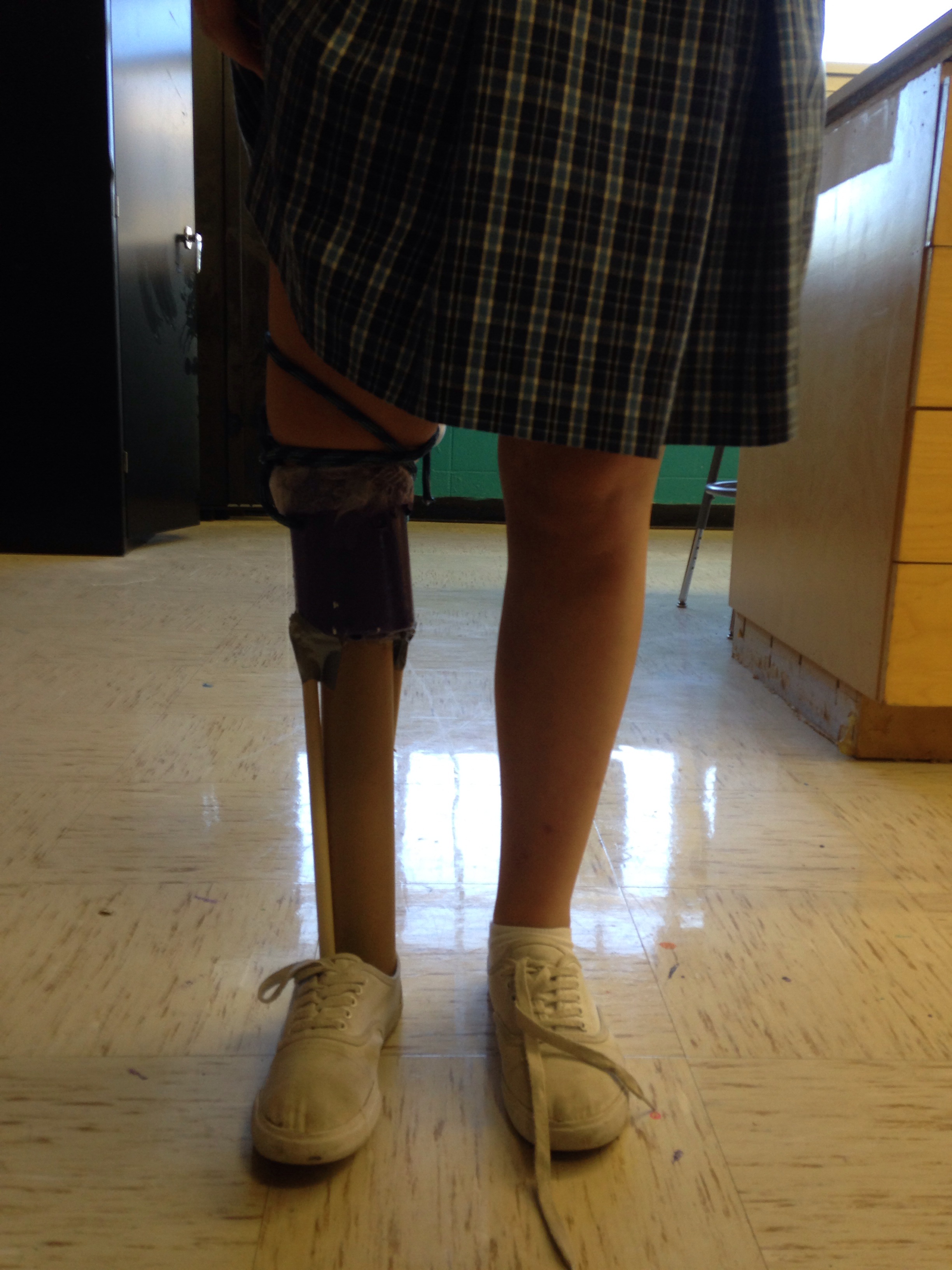
Then, we starting to construct it. We used materials like plastic cups, rope, bubble wrap, styrofoam, and wooden poles. We made a cup with padding to put my knee in, the wooden pole for my leg, with two support poles around it, and rope to attach to my knee. It could stand up on its known, and it was comfortable and looked presentable. When I tried walking with it, it wasn’t the best, but that would be hard to do anyways, with some of the limitations we had. I would say for the most part it was a success. Next time, I would just try to make it walk better somehow.


The reason we made a prosthetic limb, is to try and create something that would be comfortable for people who had been in car accidents, war, and more, who no longer had a limb. The great thing about thing about this module was that not only did we learn so much, and accomplish making an actual leg at the age of 13, we made it so that in the future, we can actually make something that helps people in need.

image

Is Two Weeks Really Two Weeks?

In 8th grade, we have a project based learning class called PLTW, which you all know about obviously. But I’m not going to talk about that today, I’m going to talk about the two week time span you have for each module.

Personally, I feel that two weeks can either be way too much time, or not nearly enough time. Most of the time, two weeks is just enough time, you don’t need to rush, and you won’t just be doing nothing. In this class we are constantly rolling and doing things, we’re never just sitting around wasting time.

There are good things and bad things about having two weeks to finish an ENTIRE project. So I present to you, The Good, The Bad, and The Unthinkable.


The Good: There are many great things about two weeks. In just one week, you can finish both challenges, the quiz, and the reflection. Then you could just sit around and do nothing for the next week. I personally love when this happens because then you turn everything in early and you feel so accomplished and yay.

The Bad: Alright, so this happens a lot unfortunately to some. When this happens you basically swith what happens from The Good, and its not fun. You slack off the first week, then you scramble the second week, trying to do both challenges, a quiz, and reflection, in two to three classes. Its sucks.

The Unthinkable: So this is gonna sound crazy, but think about actually getting something done on time and not early or late. WOW. Crazy right? But this is about when you do everything on time, and you turn it in the day its due, and you just start right up on the next module!


So in conclusion, you only have two weeks. Make the best of what you have. Just get your things done and turned in on time. – Alyssa D.

Coolest Class At ARS

Why is it so fun?

Pltw is such a fun class!! What makes Pltw so fun? We have a something called a “module.” A module is basically a project that we do with our groups. Every group has their own career pathway. For example, our group chose media technology as our pathway. Our module is based off of media technology. There are 3 main reasons why this class is so much fun.

1.We get to experience what we want to learn in the future. 2. We get the opportunity to be free and choose our own pathway to explore. 3.This class helps us decide what we want to be in the future. Now lets get into the real talk.

Why is Pltw so important?

Besides PLTW being extremely fun, there is also a meaning to why we have PLTW. In the beginning of the year the first time I heard about PLTW

I honestly thought that PLTW was not important. I thought PLTW wasn’t going to help me achieve in life. After 2 or 3 weeks I actually understood why we had this class. We are very fortunate to have this class that helps us choose what career path we would want to take for next year. This class has helped me have an impact on my decision for next year.

What if you think you wanted to do media technology and now you want to be in biomedical science . To be honest I sincerely thought that I wanted to be an engineer when I grow up. But when Ms sauter told us to choose our pathways I decided that I wanted to go to media technology just to try it out and see if I enjoy it. When I was finished with my first module I had realized that media technology was really fun so I had decided to do it again for my second module. After my second module I had realized that media technology was the most funnest thing I could ever choose. You get to work with your friends and even have a good job. If I choose media technology in the future I wouldn’t even notice that it was my job because my job would be so much fun.

imagePLTW is also important because we learn life skills. One life skill that is important that I have learned is that to always be creative, (this comes in handy in a lot of situations.) Before I took this class I didn’t think being creative in life was necessary. In this class, being creative is the number one thing you need in order to complete your project. For example, right now my module is based on screen printing. The first challenge is to create a design that we would want to print on shirts, posters, bags, etc. In order for me to complete that task, I have to think outside the box and come up with a great idea of what my design should look like. It can’t be just words that says” PLTW is cool.” It has to be creative and grab who ever is looking at the picture.

This class is a learning class. PLTW is all about learning new things about yourself. It could teach you life lessons or can  help you decide on a big decision in the future. The overall point of this class is that its very enjoyable and a an overall wonderful class to be in.

image (1) By: Ariela V.

Little Habits & Big Outcome

Many classrooms in ARS and all around Austin contain the same things: chairs, desks, and maybe some computers. But something unique about this school is that we have a room where everyone can be comfortable and learn at the same time: the PLTW room. This room is originally used for the Project Lead The Way (pltw) class, which teaches young women like ourselves, to construct different objects, program different websites and videos, make 3D objects with a 3D printer, and much more. Maybe other schools do this, but what we have is much more special. All of these things the room holds, helps us make some advanced objects, like a prosthetic leg.

We can construct or program many things depending on our interests, which is something I really enjoy in this class. A lot of our girls have many different interests, but no matter what it is, there is a module we have that you can put so much effort into. My interest is the biomedical field, because I enjoy coming up with new things to help people of all ages. That is one of the reasons I am planning on going into the biomed pathway once I get into high-school. Looking through all the options under biomed, I noticed that there was one for prosthetics, and I decided with my group that prosthetics would be a challenge we were willing to go through.

While going through all the instructions, it took a lot of brainstorming in the beginning to actually know what you want, or how you want it. Many measurements are needed because you need the measurements to know how long you need it, or how wide you need it to fit the clients knee. Although taking measurements is not the biggest challenge, you had to be very accurate or it would mess the whole leg and project up because it wouldn’t fit. This module may have been challenging through the process, but we had fun with it. That one main reason many students enjoy this class, you can have fun but get your work done. One of my favorite things about this module, is that you can be creative with the way you construct the leg, and how you present it. When we first started to construct the leg, we had no idea how to put the materials together because we didn’t think we needed to brainstorm about it. But once you manage to figure out those materials you need by testing out their stability and durability, you basically know how the leg will work.

Another challenge that we faced was finding out a way to put the leg onto the knee without hurting Rebecca, which was our client for this module. We had to brainstorm again for way to connect the leg onto her body without using harmful materials that can damage your skin like glue, hot glue, nails, needles, etc. It took us a while, but we finally figured out that we could use a thick rope that we can connect around her leg. It took some trial and error before we could find the final way to attach the leg to her body. But trial and error is something we have to get used to because its never going to be perfect the first time you do it. The final product was very satisfying because not only did it work, but it brought my team and I closer in many ways that working alone couldn’t have. I have gained many skills like teamwork, communication, using different tools and measuring accurately. All of this can later on help me in other modules and in life.

This is the outcome of our prosthetic leg, being used by Rebecca.B

This is the outcome of our prosthetic leg, being used by Rebecca.B

By: Karla Ruiz