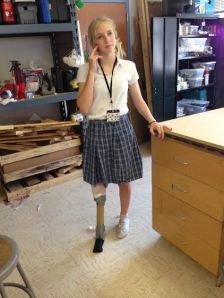
Learning From The Medicine Of The Future

by Bella Roberts

As I continue to learn and grow this year in PLTW, I am also continuing to work on a variety of modules. Just recently I completed a module in the biomedical pathway with two other group members. The module’s task was to create an interactive poster that displayed our ideas regarding the medical advancements of the future. This module was a lot of fun because it caused my group and I to really think outside of the box and constantly question each other’s ideas. Through this challenge I was able to gain a lot of skills that I may need in order to complete future modules.

I also learned a lot of new things from this module. I think the biggest thing that I learned was about myself. Completing this module helped me to realize that I am very interested in the Biomedical pathway and generally in the biomedical field. Thinking up ideas about the future of medicine made me think about how science is always changing and that it would be very interesting to experience this up close and personal.
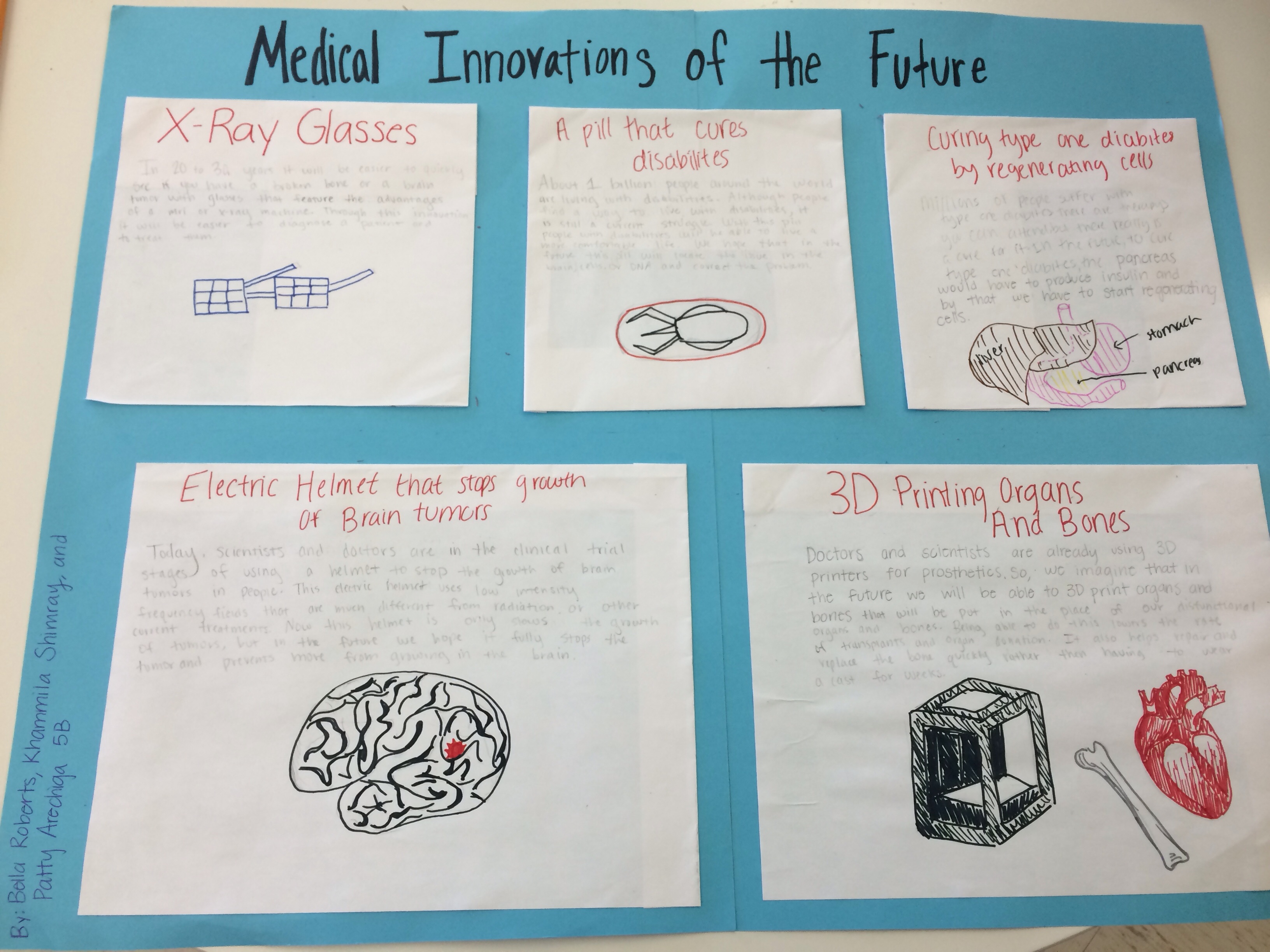
This is the poster that my group and I made about medical innovations of the future.

This is the poster that my group and I made about medical innovations of the future.

On our poster we included 5 different innovations of the future that we thought could be plausible someday. The first innovation was about glasses that work like an x-ray machine, so that physicians can diagnose patients faster and in a more efficient way. The second innovation we thought of was a pill that cures disabilities, this is meant to be a step up from therapy or medications. It is meant to cure several disabilities like down syndrome or autism completely. The third innovation we thought of was something that seems to already be in the making; it is a plan of curing Type 1 diabetes by regenerating cells. For a long time there has been no cure for Type 1 diabetes except the treatment of injecting insulin. Quite recently the idea of regenerating cells in the pancreas to reduce the lack of insulin has been introduced. The fourth innovation that my group and I imagined was an electric helmet that stops the growth of brain tumors. Cancer is a big problem but it seems doctors and scientists are always looking for solutions. One solution expanding off an article we saw that was similar to our innovation was creating something that would stop the growth of your cancer indefinitely. (Specifically brain cancer) Lastly, the fifth innovation we agreed upon was  3-D printing organs and bones. Even though this idea is already attempting to be carried out it still has some way to go before it makes a big difference in our world. Personally, I am fascinated with the idea of printing organs and I hope that I am able to learn more about this endeavor of medicine.

Overall, this module taught me a lot and helped me really come to terms with my interests. I am very excited to explore new modules but also to continue my interest in this one.
Our modules, Our struggles 🎆

Hey everybody its litzy 🙂

Today I will be doing a blog talking about PLTW, Our modules  and our struggles. Pltw is a class that comes with several fun things and several obstacles which aren’t always fun. For example each 6 week we have to write a blog and every week or so we have to do a module.  Here is where our struggles come in, sometimes the modules we pick are HARD or whatever you want to call it the thing is that they are not easy. Then we have a deadline with each module, and of course we have 90 minutes to work on our module in class but sometimes that is not enough. For me last week my bridge was due and me and my group had to face some really big struggles, we didn’t exactly turned it in on time but we had to go and work on our bridge during lunch or after school. The thing is that us as great leaders that we are have to take that step and find a time to go and finish what we  started and not just don’t care about it but if sometimes you find yourself in a struggle then try your best to talk to your teacher and try your best to find a way that you can finish anything you started.


Our class (PLTW)  has a lot of requirements that come with it but just try your best because in the end it will all be worth it.😁

Changing the World Through Prosthetics

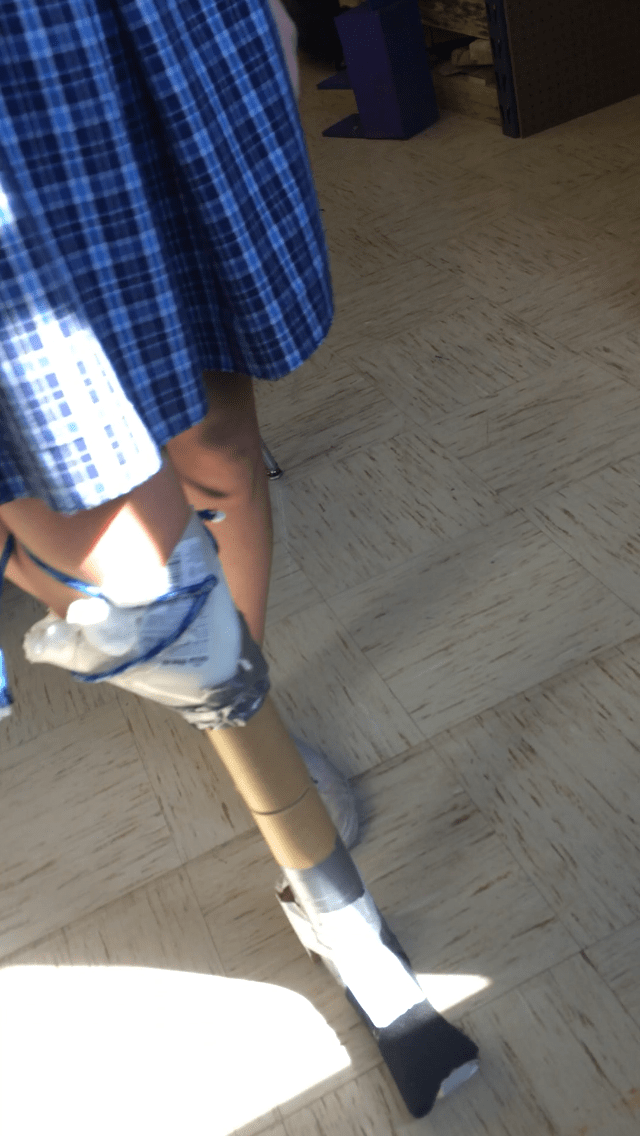
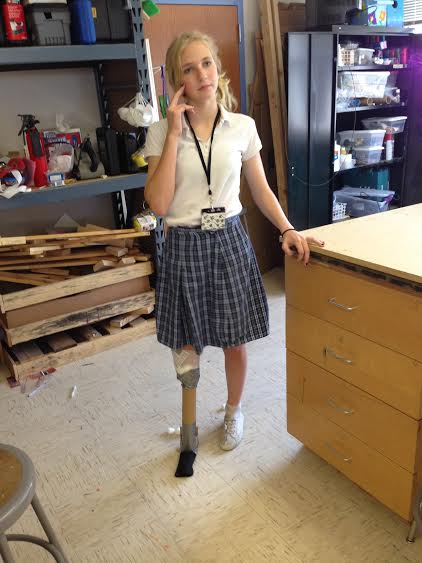
Featured imageThe biomedical science pathway always seemed to interest me the most. Finally, in PLTW I was able to see what it is like with my group by completing the prosthetics module. I came into this module not really knowing what to expect. Well, it was harder than I expected it to be. The main reason is because we ran into a lot of problems when our ideas didn’t go as planned. This module was a whole lot of trial and error. But like I learned in the engineering module, it’s good to have trial and error because it leads to new and better ideas. In the end we were able to make a good prostheticFeatured image of a lower leg.When we made the final touches, and looked back on our hard work, I was extremely proud of the prosthetic. When we got to test the leg, and it actually worked and could be used to walk, I was even prouder. I couldn’t believe I helped make it!

When I had completed the bridge in the engineering pathway, I was proud, but not as much as I am completing this prosthetic. I think the reason why is that in prosthetics, I feel like I can make a difference in the world. There are so many people struggling and in need of a prosthetic; army veterans, people in accidents and many more. It doesn’t seem like that big of a deal from our perspective. That’s why at the beginning of this project, we had to feel empathy for those missing an important body part by going without one of ours. I choose to go without eyesight. Normally when we walk, we don’t have to think about it. We just walk. But when you don’t have eyesight it becomes much more complex. You have to feel around you to avoid bumping into something. You have to listen to the voices around you to guide you. Experiencing this gives you the opportunity to know what it’s like for amputees, thus helping you to create a better end product.

This project made me think of the movie soul surfer. In the movie she loses her arm, and simple tasks like putting your hair in a ponytail is ten times harder. All of this made me realize how important prosthetics can be. They can help make the simple things in life easier again. And that’s why I loved completing this project, because prosthetics can make such big difference. I like to help people, and knowing I could do that with prosthetics makes it so much better.

-Lauren Gredicek

Freedom in GTT 🎉

Hey, It’s Chloe here! ☺

pattern-rootsuit-usa_flag-4I’m here today to blog to you about freedom within a classroom, specifically GTT. In GTT we have rules to follow and deadlines to meet, but we also have a lot of freedom. Freedom is a really interesting concept. Usually when us as Americans think about freedom, the first thing we think about is USA! 🎉🎉🎉 ‘Murica! But, in reality, freedom doesn’t always have to do with America. Freedom generally just means the right to act or speak as one wants too. Here are a few ways we get freedom within our GTT classroom, the makerspace.

1.) We are able to move at our own pace.

Ok, so you might be thinking, “But Chloe each module we do has a deadline blah blah blah…” and yeah, you’re right. But still, as long as you get your work done by the deadline, you get to decide what you want to have done before each class and so on. I think that this is a really good rule because it teaches responsibility. You have to manage your time wisely, but you still get a good amount of freedom.

2.) You get to use almost any piece of equipment or technology that you need to.

You may not think of this as a privilege because you are used to it now but, #tbt to when we weren’t allowed to bring our own devices. It seems like ages ago but there actually was a time when you weren’t allowed to listen to music on your phone in class. Now that we are able to bring and use our own devices we have more access to research which is always helpful. If you feel left out right now because your parents still haven’t let you get that new iphone you’ve been wanting, I have good news for you! All around the classroom are brand new and amazing Mac computers just waiting for you to log onto them, and don’t forget the ipads! Along with the technology there are also tons of great tools, but those aren’t as fun to talk about. And last but defenitly not least…

3.) We get to choose what module we want to work on. 

Every two weeks we have to make the big desicion of choosing our next module! We have been doing this for quite a bit now but I think we need to step back and realize how AMAZING this is!!!! Unlike Science or U.S. History (Don’t get me wrong both classes are still great!) we don’t have to learn about a specific topic if we don’t want to. We get to decide if something sounds fun to us or not and I think we should appreciate this because, sadly, not many other classes are like GTT…. even if we wish they could be.

imgresSo the next time you hear the word freedom, I hope you think…GTT! And America of course.

Thanks for reading!
~ Chloe Leline
(8th period)

Biomedical Science of the Future by: Catalina Gonzalez

Hello Readers,
My name is Catalina and I would like to talk to you about the latest module I have explored in my PLTW class. That one would be Biomedical Science. I want to talk to you about this module it seems I have enjoyed working on it more than the Media Technology or the Engineering. The thing that most interested me about this module is how we got to use our imaginations to see what medicine would be like for the future.
Our assignment was to make a poster with what we thought medicine and machines would be like in the future. My group started thinking about what we could do and we noticed that all of us were thinking of movies we had seen and books we had read that take place in the future to get some ideas. I remember our first idea came from one of my group members. Her name is Bonnie and I remember she was thinking about how in the book The Giver by: Lois Lowry they used a sort of medicine giver that gave you the amount of medicine you needed. So she came up with something similar. Then our second idea came from me! I was thinking about a TV show I was watching this one time where a little boy needed a organ transplant but he had to wait years for the right one to appear. Since I know this happens in real life too I thought it would be helpful to have an organ printer that just prints out a working organ that is perfect for you. Then our third idea came from another group member, Zoë. She said she had come up with a drug tester that was installed in the steering wheel of a car. What this would do is that as soon as you get in a car the drug tester will see if you have any drugs or alcohol in your body. If the tester detects some then the car will lock and you will not be able to drive. We all thought that would be a great and helpful idea for everyone living in the world.
Once we got our ideas together we finished making the poster. But there was still something left, which was to make it interactive. We had that app our teacher had showed us called Aurasma and we decided we would add a realistic looking picture of what the machine would look like when a person would come and scan the pictures we drew.
We are all very proud of our finished product! We actually envisioned what medicine and machinery would look like in the future. I thought this was a very exciting project to do because it gives you a taste of what could happen with medical technology in the years to come.
Poster

Thank You for reading,
Catalina Gonzalez

Planning Prosthetics

My favorite module in this class (PLTW) thus far, would have to be the prosthetics module. This is  because of the amount of interesting research. Personally my favorite field is BioMed. I love the idea of being able to help people, and create new technological ideas. I have always known that I enjoyed the biomedical field, especially the historical origin of it, I just didn’t know to the extent, or amount that I would enjoy the whole field, and everything that came with it. I was most surprised by how much I loved building. I think that because of learning this new interest I may even consider the engineering pathway, although BioMed would still have to be my first choice.  I originally thought, before starting this class, or maybe even the project, how much I loved inventing, designing, and actually building. This last module, although I had fun, and enjoyed the process, I didn’t feel as though I was as interested in what we were doing- I definitely think that this was “more my speed”.

Starting of this module I didn’t quite know what to expect. I remember first looking at the video of the double amputee running on a track, and seeing a researcher casually walking down the stairs pretty much 100% normally, and being totally amazed. I never thought that I would be able to do anything like that, and I don’t think any other members of my group thought so either. How would it be possible to make a working limb with just some cardboard tubing, cotton balls, and a swim noodle? Each one of us each had our own, unique ideas. We noticed that each of us had realized that we needed to replicate a joint in some way or another, and thats where we started from. Using each others leg we took videos oFeatured imagef each other walking and examined where we thought your body but the most pressure, to try and relieve the client from as much pain as possible. After many trials and error we eventually came up with what we thought an amazing femur, ankle, and foot replica- we could even walk on it! But there was one issue, it was extraordinarily painful for your knee. So we made a latch, and found a old glue bottle, and glued some cotton balls for comfort. We couldn’t believe our eyes,we practically, or maybe totally completely, had made a prosthetic leg!

I think that the reason I enjoy BioMed so much, and I think why many others do as well, is because you feel like you are making an impact, and an important helpful one on the world, that could be used to actually help someone in need. For me the difference in the other pathways isn’t that I wouldn’t think they were fun, but because I wouldn’t feel like I was making an immediate impact. When you see the obvious progression you are making day after day, it feels amazing. And even if you have to start over, or scratch something out, you still feel like you are improving what you are making. I also like having a set goal (ex. make a prosthetic for a leg amputee, write a paper about what ‘blank’ disease is), and being able to know that you are finished, and it works. I feel that things like media tech and engineering don’t always have a black and white goal, or at least not as often as a medical innovation would. I think a goal that I should set for myself is being able to venture out more, and being able to work with groups that don’t always have a set exact goal that you must have. Personally, I think that it would be smart to venture out of my comfort zone.

– Catherine Gavin

The Bridge Building

Hey, Bonnie here! So far this year, we have completed four modules in eighth grade PLTW. We are currently working on our fifth (for me it is mechanical systems). The third module I did was engineering. For the engineering module, we had two different challenges. The first challenge, (which was independent) we had to watch a video and contribute our ideas on a class board. The second challenge, we had to create and build a bridge out of limited materials.

The first step we had to do, was we had to write a design brief. A design brief is the “blueprint.” What I mean is, it is a basic list that tells you what the problem is, what the constraints are, and what needs to be solved (solution). Our blog post pic 1problem statement was we had to build a bridge that is made out of toothpicks, glue, and thread. The constraints that we had was we could only use the given supplies, it had to be at least sixteen inches long, the height had to be four inches tall, the width of the bridge also had to be four inches, and it had weigh at least forty grams. The bridge had to be able to bear some weight.

After we completed the design brief, we had to do another thing before we could start building the bridge. We had to create a decision matrix. A decision matrix is a table that has all of our possible blog post pic 2ideas for the project. We had the criteria for the bridge we needed to build. For each of the ideas we had, we would have to rank how well it met the criteria and then total the points up. Which ever idea had the most points, would be the best choice to build.

The last step we had to do before we could build the bridge was draw a technical drawing for our idea. All the drawing required was that it had toblog post pic 3 show the basic structure and it had to have the measurements. This was just a drawing of our idea, so it exactly what our bridge looked like because as we were building our bridge, we changed the design a bit to make it better and stronger.

Once everything was ready and we had a plan, we started to build our bridge. The first thing we decided to do was to create different jobs for everyone, so that we could manage our time better. We also made a plan so that we knew what part of the bridge we were supposed to be working on. At first, we were using a lot of string to support the bridge, but then we realized that the bridge wasn’t getting any stronger. It turns out, we needed to use a lot more of the toothpicks than string. After we build all the parts of the bridge, we had to figure out a way to connect them. This took awhile, since we had used so much string and we couldn’t really find a place to connect each piece to one another.

Once we had completed building our bridge, it was ready to be tested. To test our bridge’s strength, we had to tie two strings to a board. We the had to put the two strings over our bridge and lay our bridge on two stools a distance apart. There was several small weights that we put on the board to see how much weight our bridge could hold (in grams). Our bridge held up around 1,200 grams, which was a lot more than what we expected.

So this was the first module that was really hands-on that I have done. It was a good experience because after my group and I completed the challenge we were all proud. For me, I felt accomplished because it was difficult and frustrating at times. The one thing that I think was the hardest about this challenge was trying to keep the toothpicks together, using only elmer’s glue. But, I had a lot of fun building this bridge and I can’t wait to do more of these modules!

Just a Tree

Well hello…

I’m going to be telling you about a tree.  It’s not even  all that special.  Its just  a tree  outside of our school looking into a window.  It’s not extremely old, but not very young either.  But it has probably been there since before Porter Middle School turned into Ann Richards School for Young Women Leaders.  This tree has seen a school changed from just a regular school to an all girls school dedicated to making the next generation of women leaders.  This school has changed over the years, just like this tree.

From only 6th and 7th grade to 6th grade all the way to 12th grade.  Just as this tree has grown more branches with many smaller leaves.  Like all the teachers and all their students, is what I think.  Even after Ann Richards has graduating seniors.  For people just like me, Erin.  I come to school here and get to work in both of the labs like my fellow Ann Richards sisters.  the school is still continuing to improve.  For example PLTW(Project  Lead The Way) has changed loads.  Ann Richards PLTW now has a “clean” lab for generating ideas, equipped with computers, windows/whiteboards to show ideas, and  many tables to just sit and talk.  The room this lab is connected to is the “dirty” lab.  In that lab we have saws and the tools used to actually build what we’re making.  This lab will also have a garage door to bring what we build outside and vise versa.  In both of these labs we create all types of different things when given a task.  These tasks are called modules and we can pick which ones we do.  They are under three categories,  like the three pathways at Ann Richards, engineering, biomedical, and media tech. Under these modules you have many different modules that you can choose from.   Some modules you can do all in the “clean” lab, but some like engineering you need to work in the “dirty” lab.  Even though these labs are only used daily by

And out the windows of this “dirty” lab facing the parking lot, is a tree.   but as you know this was never really about the tree, was it?

By Erin Nolan

Our Bridge

This year Project Lead The Way has been so fun! I love the new makerspace, I feel right at home, the new furniture is just so comfortable. I also love the whole set up of the class I really enjoy how everything is online and we get to have a lot of free will. we get to just come to class and get started on what we need to, we don’t have to sit and a listen to a teacher ramble on forever about instructions.image

This past two weeks I completed the Engineering module, it was so fun and interesting. I really enjoyed making our bridge and testing it. After completing this module I feel very proud of our final product no matter how much weight it held. I have been interested in careers in the engineering pathway for a while now, and I feel this module just solidified my interest. I think that working in the engineering field would have it ups and down like any other job, but it would be very exciting to go to work everyday and solve problems.

I think solving problems was a big theme in this module, I know my group and I came across a couple of situations where we had to step back and rethink what we were doing. For example one day when we came to class the bridge we had started building had completely disappeared and we had to restart the entire thing. As you would guess this was pretty frustrating but we had to just stop take a breath and get back to work. Even though I was extremely annoyed, believe it or not it also taught me a lesson. It showed me what being an engineer is really like. You are not always going to succeed the first time, you have to keep trying until something works.

In the end even though the final product of our bridge may have not been exactly what we had imagined, I know I am proud of the hard work we put into it. Building a bridge out of toothpicks and Elmer’s glue is not the easiest task in the world.

– Macy Nelms

STEM Through New Eyes

By: Isabella Vergara

This year, we have a new style of learning than normal. We started out the year in our library’s biography room, where we had limited supplies, and space.  After a rather stressful start to the year, we finally got to see our new makerspace.

Everything was new about this year. Ms. Sauter was new to STEM, we have our new makerspace, and we also have a new way of learning. This year, we are working on modules. Our modules help us learn all about all of our pathways; BIomed, Engineering, and Media Tech. So far, we have completed 3 modules, and are working on our fourth this year. About halfway through the year, we will have our Maker-fair, which is a great opportunity to show off the skills that we learned through our modules.

My favorite module so far has been an engineering challenge where we build a bridge out of toothpicks, glue and string. Though this challenge was rather frustrating, I felt as though I actually learned much more than other modules that were less frustrating. Our bridge did not end up as we had planned, however; it was too short in length, too tall in height, and couldn’t support as much weight as what the requirements read. However, we went through the design process to come through to our final product, and we learned the frustrations of being an inventor.

Overall, I’ve really enjoyed this year’s new setup, although we are still getting used to how it should all work out. For example, many of us are still trying to work out when the due dates are, or sometimes, we have issues with handing projects in, but otherwise, this year has gone smoothly.

I think the idea of project-based learning is playing a big part of this year, and it is making my learning all the more effective. As we learned with Ms. Sauter last year, project-based learning helps us both understand our school curriculum, but it also sets us up for when we work in groups in our jobs.

Although we are less than halfway through the year, I think that the rest of the year will be as successful as PLTW has been since the beginning of the year.